Sunday, March 25, 2007

ivanovo detstvo & die große stille

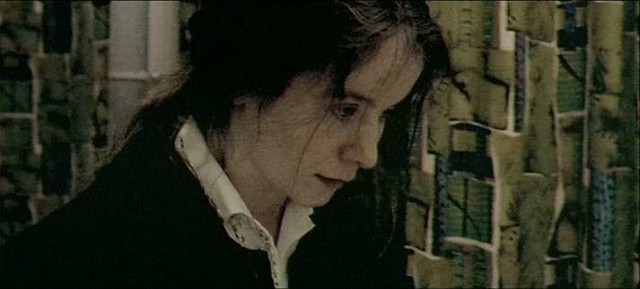
andrei tarkovsky: ivan's childhood 1963

tarkovsky said of ivan's childhood:
"generally people's memories are coloured by poetry. the most beautiful memories are those of childhood. of course memory has to be worked upon before it can become the basis of an artistic reconstruction of the past; and here it is important not to lose the particular emotional atmosphere without which a memory evoked in every detail merely gives rise to a bitter feeling of disappointment. there's an enormous difference, after all, between the way you remember the house in which you were born and which you haven't seen for years, and the actual sight of the house after a prolonged absence. usually the poetry of the memory is destroyed by confrontation with its origin" pp. 29

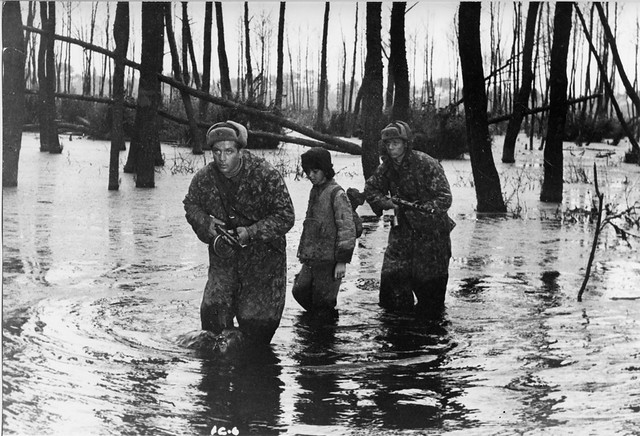
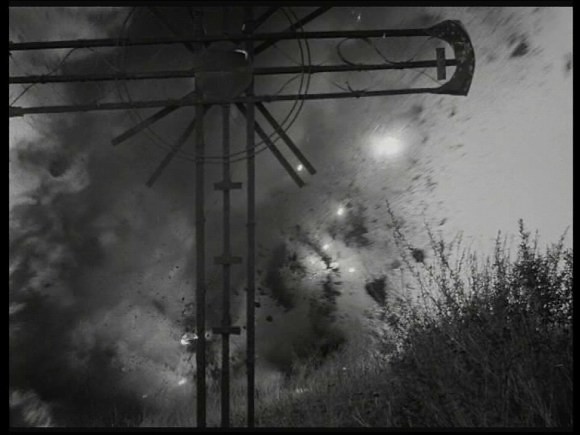
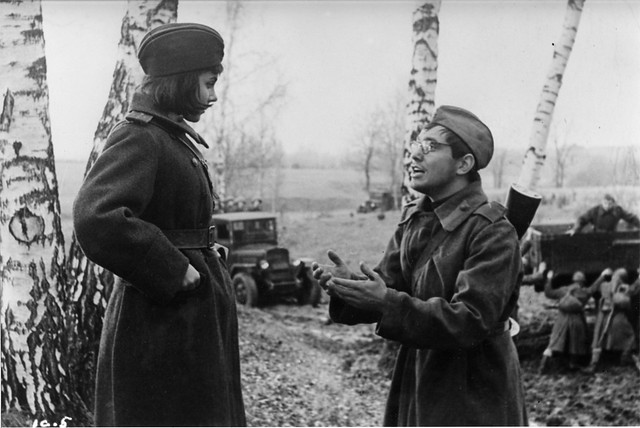
seeing this today in the theater, i was overwhelmed by the atmosphere tarkovsky created, and his subtle indications of war achieved through sound, costumes, blackened and abstracted landscapes, and flashing lights (falling from the sky). the war seemed distant and abstract, like it was not real. this "stratagem" turned ivan's childhood into a film about memory.
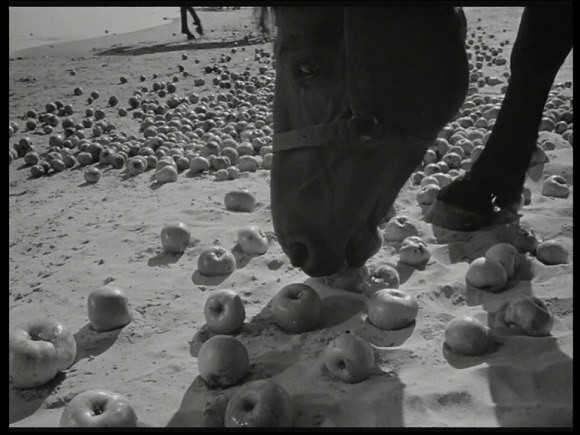



philip gröning: die große stille / into great silence 2005

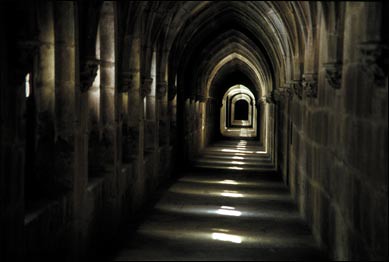
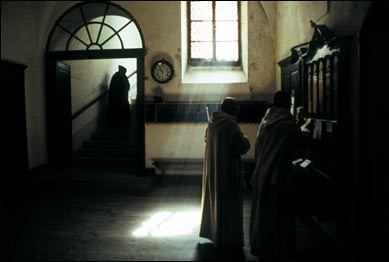
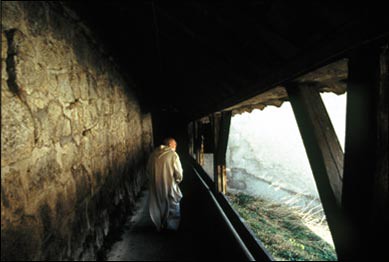
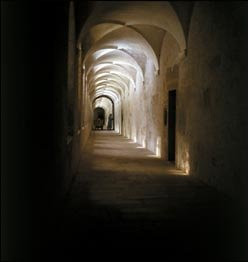
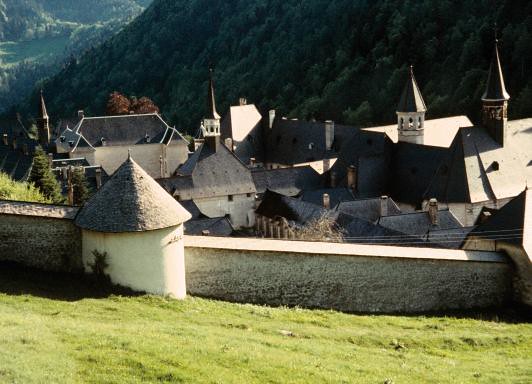
i also watched into great silence today. mostly impressed by the film's sound design. the sound of bells, near and far, is ubiquitous. sometimes you see the bell ringer, sometimes not. you also hear the beautiful singing of the monks throughout, their footsteps, the creaking of their chairs, and many other delicate moments. some are clear, some reverberate in the distance.
there are also moments of humor, where a monk plays with cats, some bulls decide to enter the monastery, but most especially when the monks go sledding.
i have to say i had a problem with some formal elements of the film. i found the editing to be often heavy handed, with a lack of timing and grace. the photography was very inconsistent. at times it was truly beautiful and mysterious (the images of water were breathtaking), at times very clumsy. digital grain often made its way into the film, used in a way that just drew to much attention to itself.
in the end though i found it to be a beautiful film-going experience, but frustrated by some of the aesthetic decisions.



books:
-sculpting in time, by andrei tarkovsky, univ. of texas press.

Saturday, March 24, 2007

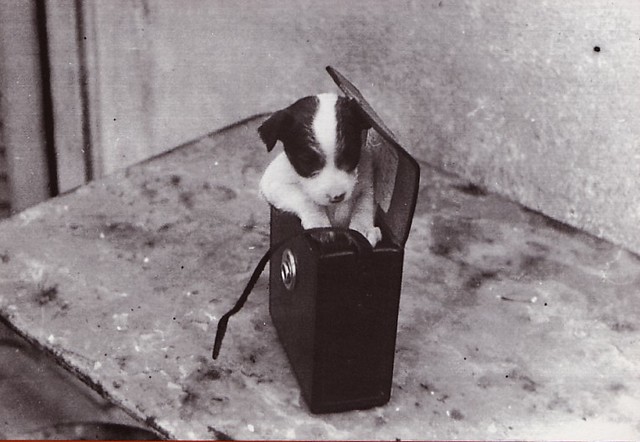
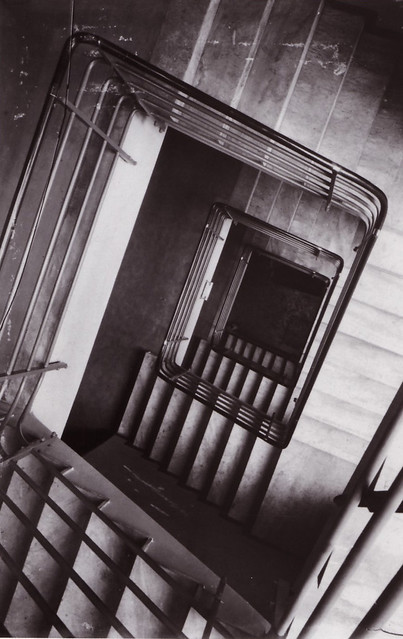
dogs and stairs by terragni

2 images relating to giuseppe terragni, fascist architect.

photo by terragni


novocomun, como, main staircase, terragni

Tuesday, March 20, 2007

the naked city & the most dangerous game

realism & artificiality in 2 great american films.

watching 2 movies this evening, i found that my favourite part of each film contrasted realism & artificiality.

1. realism: the end of the docunoir film the naked city (jules dassin, 1948) where willie garzah runs to his death on the williamsburg bridge, hunted by barry fitzgerald. this film throughout has the grittiness of a neo-realist film, but especially the death scene at the end, which is really quite spectacular.

2. artificiality: the beginning of the most dangerous game (irving pichel, ernest b. schoedsack, 1932) where a (miniature) boat navigates through the rough sea (or a tub of water).
this artificiality has such a beauty to it, the real thing would pale in comparison. also of note is the very atmospheric hunting scene towards the end (see image). the sets of this film were recycled from king kong.
these scenes make me think of jack smith and his love of josef von sternberg's visual style, with its abstractions and bizarre artificiality.


naked city 1948 (d. jules dassin)


the most dangerous game 1932 (d. irving pichel, ernest b. schoedsack)
boat and bog

robby müller, cinematographer

robby müller (1940-)
bio from wim wenders site:
"robby mueller was born on april 4th 1940 in villemstad, curacao, on the dutch antilles. he studied at the filmacademy in holland from 1962 to 1964 and started to work as a director of photography soon afterwards".
certainly one of the most interesting living cinematographers, he has worked with wim wenders, lars von trier and jim jarmusch among others.

his filmography includes: the american friend, repo man, paris, texas, to live and die in l.a., down by law, barfly, mystery train, dead man, breaking the wave, and dancer in the dark.a great example of his craftsmanship is the ending sequence of dead man, when the canoe drifts out into oblivion (see image below).


paris, texas 1984 (d. wim wenders)


the american friend 1978 (d. wim wenders)


breaking the waves 1996 (d. lars von trier)


dead man 1995 (d. jim jarmusch)


down by law 1986 (d. jim jarmusch)


dancer in the dark 2000 (d. lars von trier)


some films:
-the scarlet letter 1973 (d. wim wenders)
-the wrong movement 1975 (d. wim wenders)
-kings of the road 1976 (d. wim wenders)
-the american friend 1978 (d. wim wenders)
-saint jack 1979 (d. peter bogdanovich)
-honeysuckle rose 1980 (d. jerry schatzberg)
-they all laughed 1981 (d. peter bogdanovich)
-tricheurs 1984 (d. barbet schroeder)
-repo man 1984 (d. alex cox)
-paris, texas 1984 (d. wim wenders)
-to live and die in l.a. (1985) (d. william friedkin)
-down by law 1986 (d. jim jarmusch)
-barfly 1987 (d. barbet schroeder)
-mystery train 1989 (d. jim jarmusch)
-korczak 1990 (d. andrzej wajda)
-until the end of the world 1991 (d. wim wenders)
-dead man 1995 (d. jim jarmusch)
-breaking the waves 1996 (d. lars von trier)
-buena vista social club (1999) (director of photography: amsterdam) (d. wim wenders)
-dancer in the dark 2000 (d. lars von trier)
-coffee and cigarettes 2003 twins & memphis version segments (d. jim jarmusch)

Monday, March 19, 2007

panopticism

the panopticon is a prison building designed by english philosopher jeremy bentham in the late eighteenth century. the design allows the observer to view all prisoners without the prisoners being able to tell if they are being observed or not.

"hence the major effect of the panopticon: to induce in the inmate a state of conscious and permanent visibility that assures the automatic functioning of power. so to arrange things that the surveillance is permanent in its effects, even if it is discontinuous in its action; that the perfection of power should tend to render its actual exercise unnecessary; that this architectural apparatus should be a machine for creating and sustaining a power relation independent of the person who exercises it; in short, that the inmates should be caught up in a power situation of which they are themselves the bearers. to achieve this, it is at once too much and too little that the prisoner should be constantly observed by an inspector: too little, for what matters is that he knows himself to be observed; too much, because he has no need in fact of being so. in view of this, bentham laid down the principle that power should be visible and unverifiable. visible: the inmate will constantly have before his eyes the tall outline of the central tower from which he is spied upon. unverifiable: the inmate must never know whether he is being looked at at any one moment; but he must be sure that he may always be so. in order to make the presence or absence of the inspector unverifiable, so that the prisoners, in their cells, cannot even see a shadow, bentham envisaged not only venetian blinds on the windows of the central observation hall, but, on the inside, partitions that intersected the hall at right angles and, in order to pass from one quarter to the other, not doors but zig-zag openings; for the slightest noise, a gleam of light, a brightness in a half-opened door would betray the presence of the guardian. the panopticon is a machine for dissociating the see/being seen dyad: in the peripheric ring, one is totally seen, without ever seeing; in the central tower, one sees everything without ever being seen."

excerpt from 'panopticism' in michael foucault: discipline & punish: the birth of the prison.


Sunday, March 18, 2007

henwar rodakiewicz, water, light and the mechanized eye

henwar rodakiewicz (1903-1976): portrait of a young man (1925-31), 54 minutes.
from the dvd set unseen cinema, the mechanized eye, experiments in technique and form.

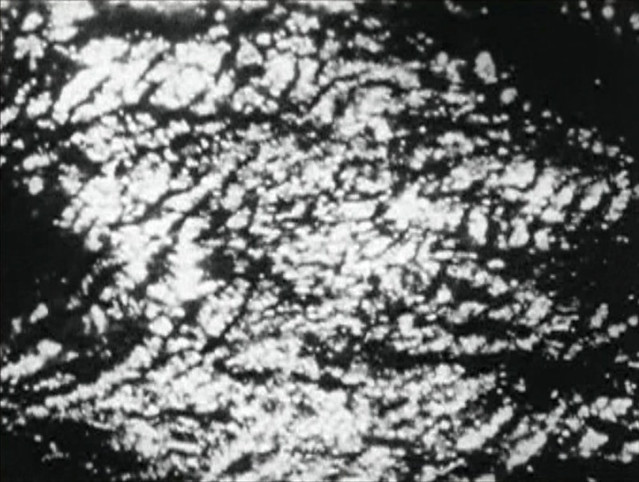
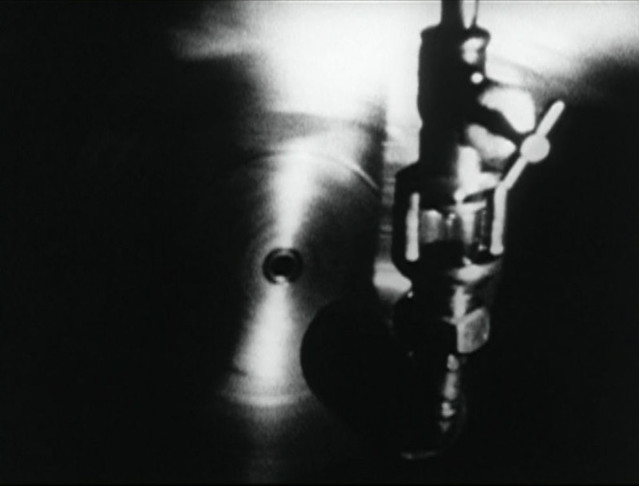
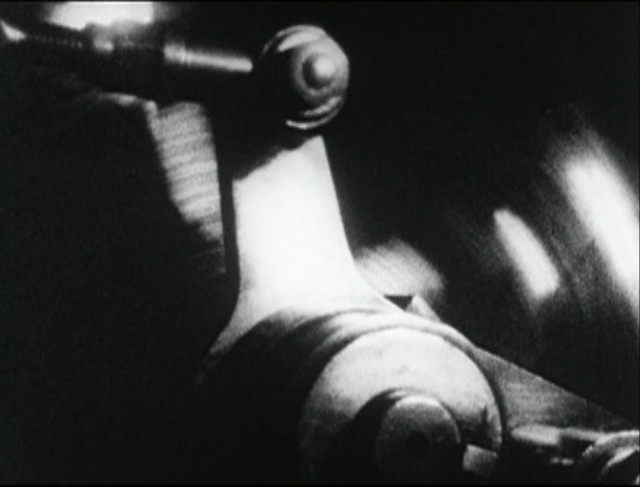
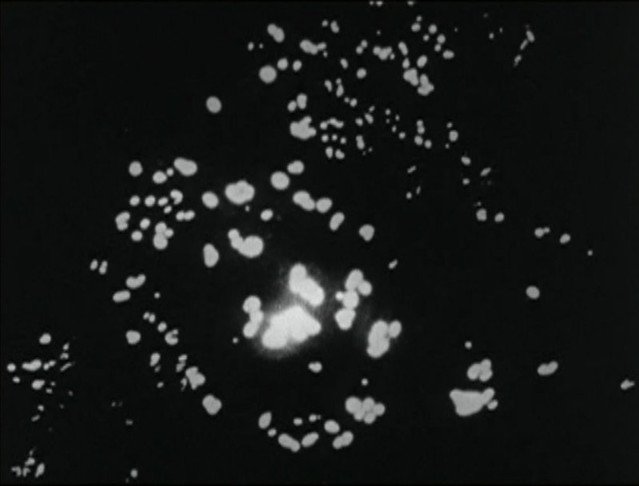
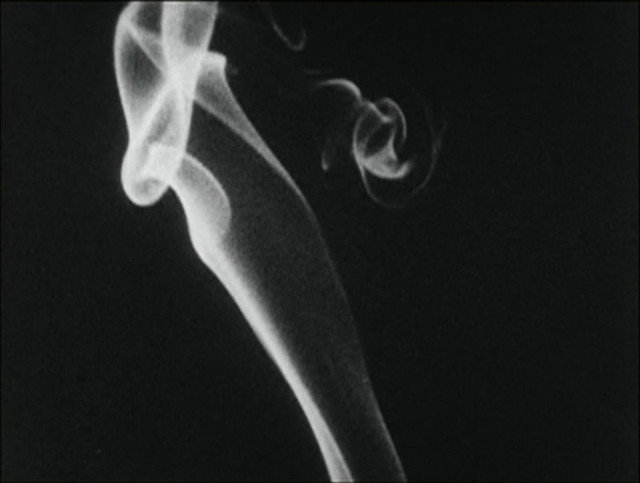
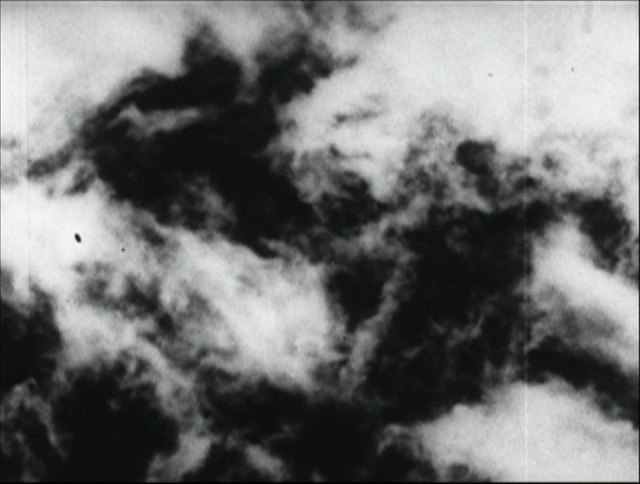
54 minutes of drifting clouds and smoke, pulsing mechanic devices, abstracted water, and trees and leaves being blown about by the wind.

from the wonderful bruce posner's box set unseen cinema.

can't seem to find out much about henwar rodakiewicz except that he did the script for the film the city in 1939.
portrait of a young man is a great example of "the long form", or, films that are challenging in subject matter, but don't conform to the traditional short length of the avant-garde film (other examples are andy warhol's empire or michael snow's la region centrale).

here are some images from the film:


water


water


machines


machines


machines


water


smoke


leaves


clouds


water


for other studies of artists using nature, see woolgathersome's lovely study of snow crystals and ice palaces.

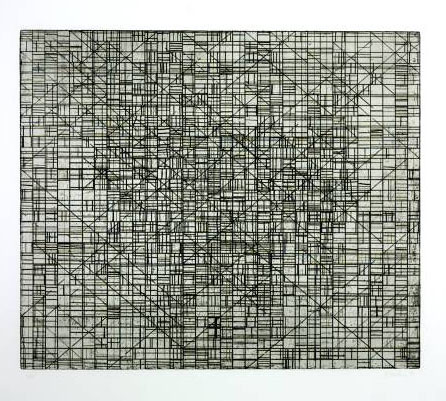
brice marden

went to the brice marden exhibition at the sfmoma today (3.18.2007)
and decided to decorate the pages of the art of memory (b)leating (l)ethargic (o)rnery (g)oat with some of his fine images.