Wednesday, March 28, 2007

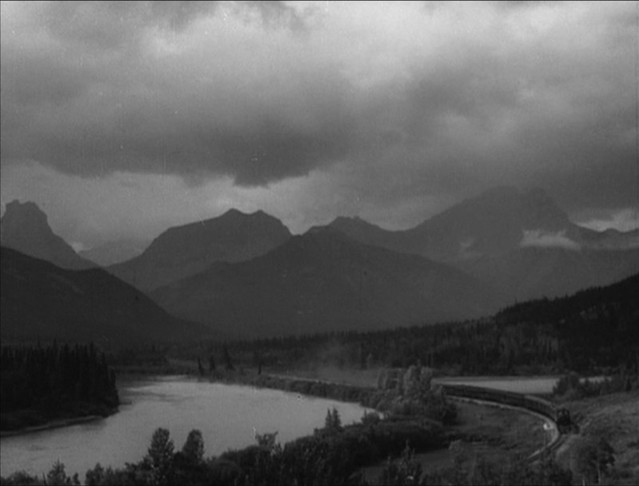
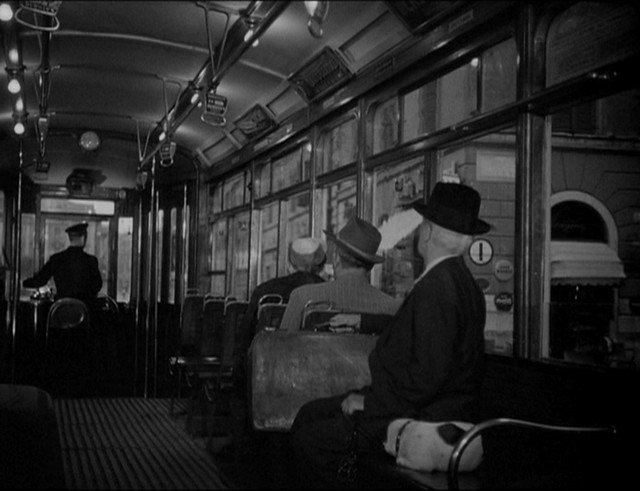
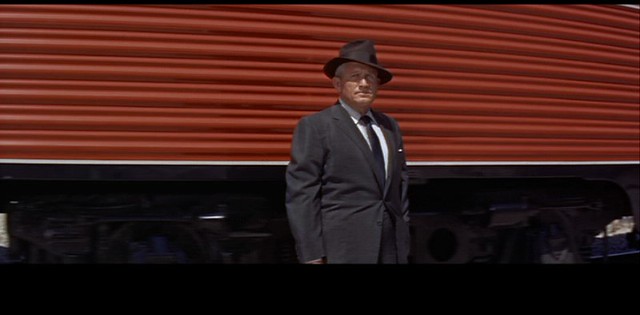
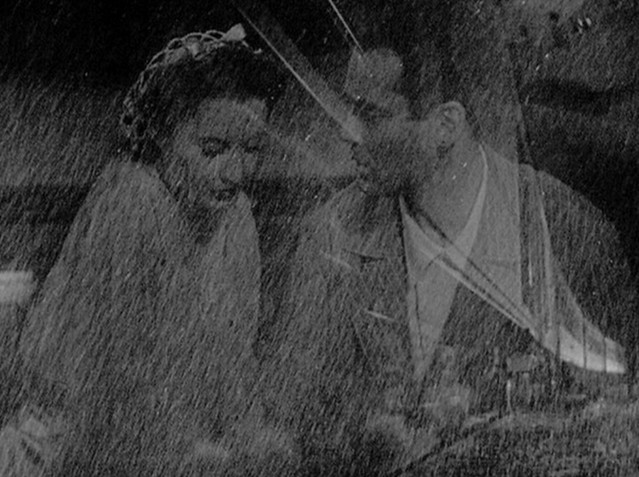
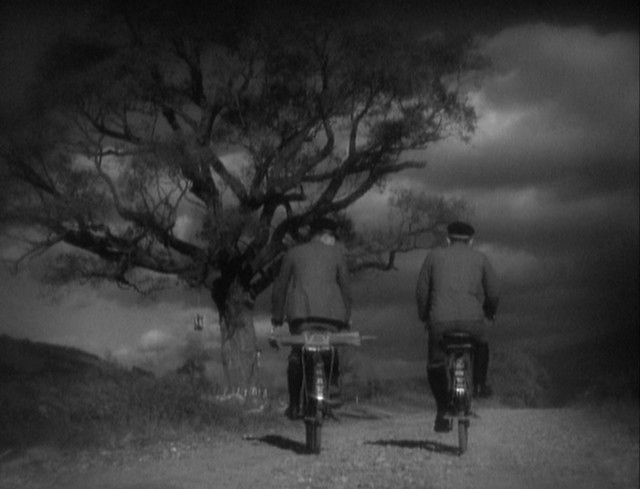
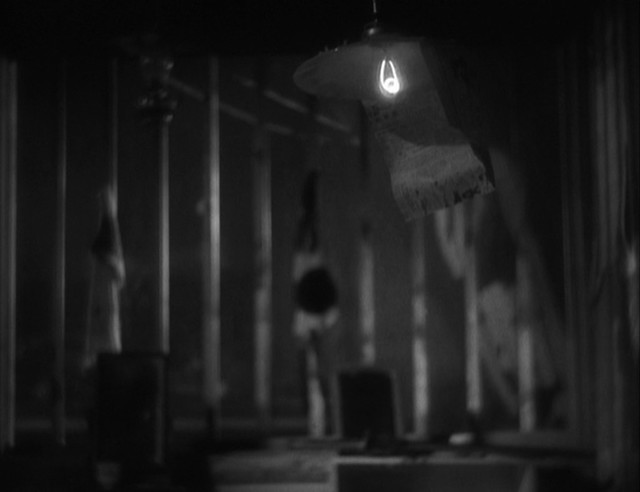
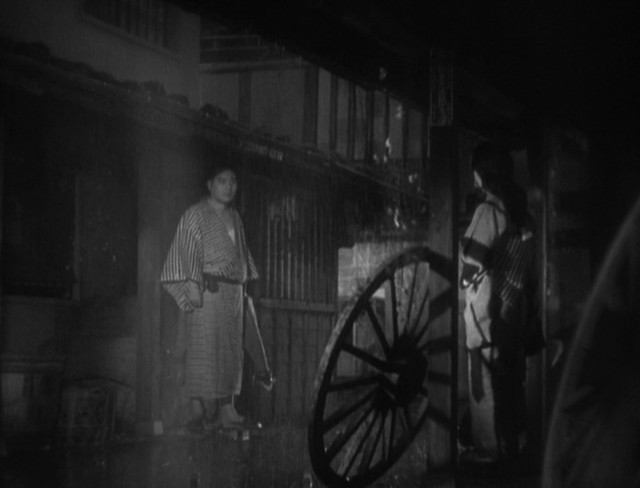
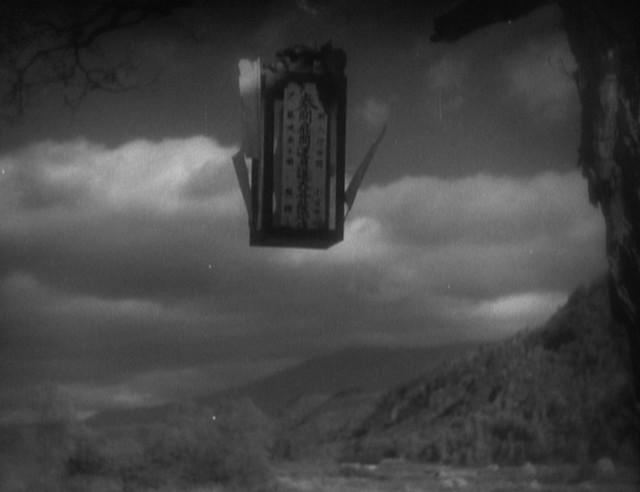
rain, landscape and light in ozu's a story of floating weeds, 1934


beautiful images by yasujiro ozu and cinematographer hideo shigehara.

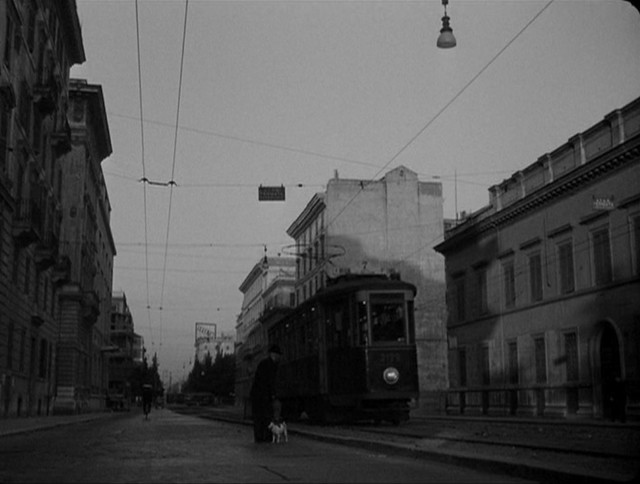
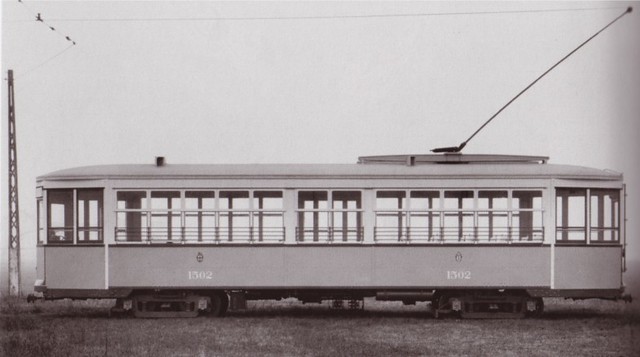
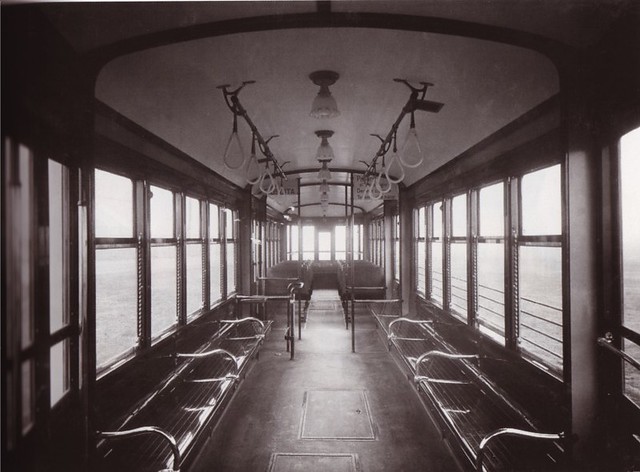
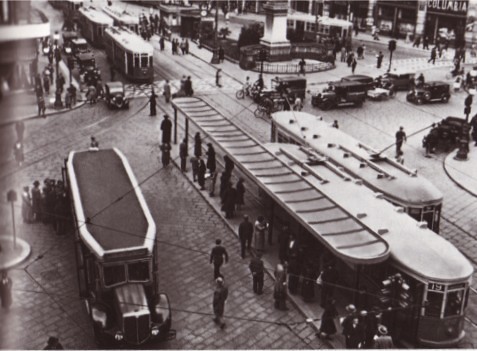
tram serie 1500, 1928

carminati & toselli, breda e altri giovanni cuccoli


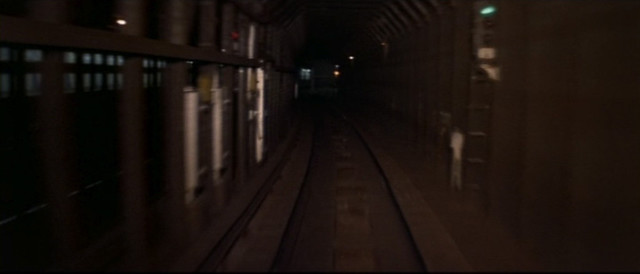
interior


in action in milan (piazza cordusio)

working in san francisco, having been in milano, and loving trains and italian design, i felt obliged to put these three photos up i found in the book design anonimo in italia, by alberto bassi published by electa.
besides the beauty of the trains, they sure do make amazing sounds as well. when i heard these before i saw them in milano, i thought for a second i was in san francisco.

here is some info i found on the train:
"in the '20s, the urban tramways in milano were interested by a high traffic, increased after the reform on november 28th 1926 when all the radial routes were coupled to create diametral services. the urban trains of a two-axle motor car with a two-axle trailer were insufficient, so the ufficio tramviario municipale (utm) decided to adopt the bogie (four-axle) tram. at that time in italy four-axle trams weren't common: they were used only on interurban lines, saving for modena that since 1920 had had eight four-axle urban cars. soon two test units, numbered 1501 and 1502 and designed by the utm engineers, were built by carminati e toselli and were delivered to the utm in 1927. these two cars were the first milano single ended cars and followed the peter witt (cleveland transit leader) scheme". ivan furlanis site.

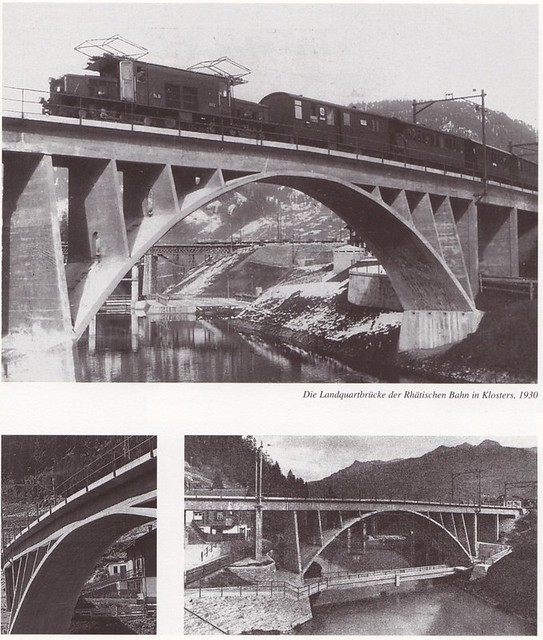
robert maillart......béton armé


(my last post before i go to nyc for a week to see all the vermeers, check out the new moma, and box up 1400 books)

nice images from a book i was looking at on the swiss bridge builder/architect robert maillart.
the image is "landquartbrucke in klosters, 1930" from the eth catalogue robert maillart: beton virtuose.

Monday, March 26, 2007

trains in cinema, part 1

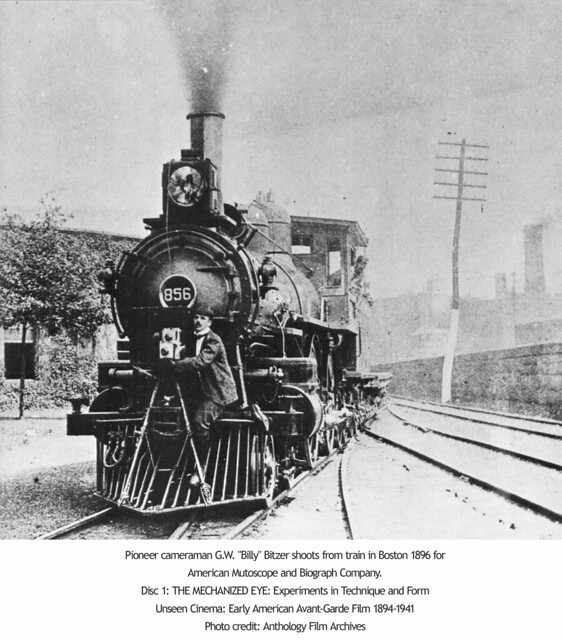
g.w. "billy" bitzer,c. 1896

films i have been watching or thinking about that involve trains, some in a minor way (early summer, ozu) or others that feature the train as a character (runaway train, konchalovsky).
i started this list by writing down films i remembered trains in, or films i was watching, then i realized i was going to slow and found some on-line lists and books to help me out. some films from this list i honestly cannot remember trains in, so more than anything this is a useful list for myself.
this is sort of a foundation list. i plan to do addendums and also more specific studies in the future.
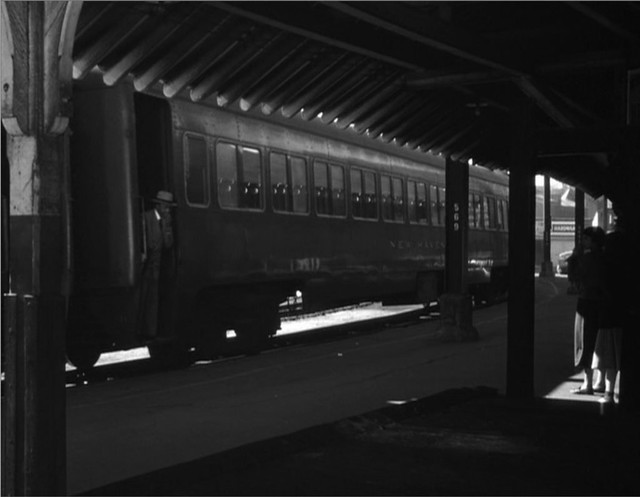
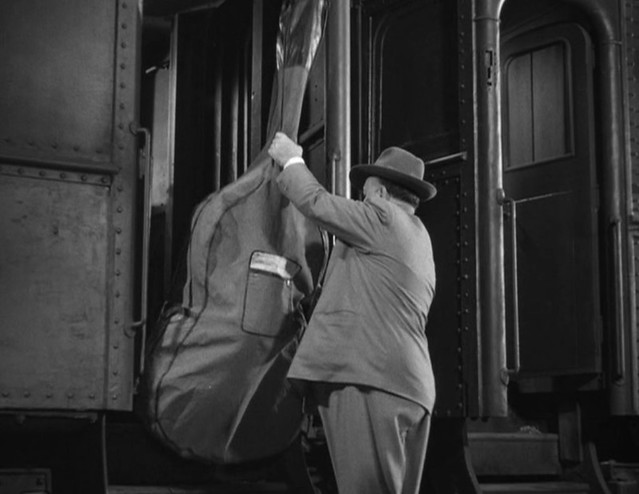
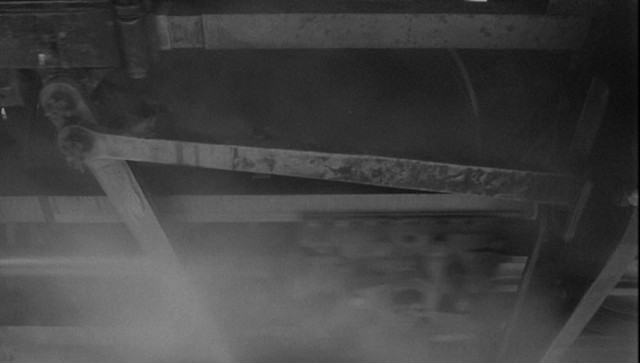
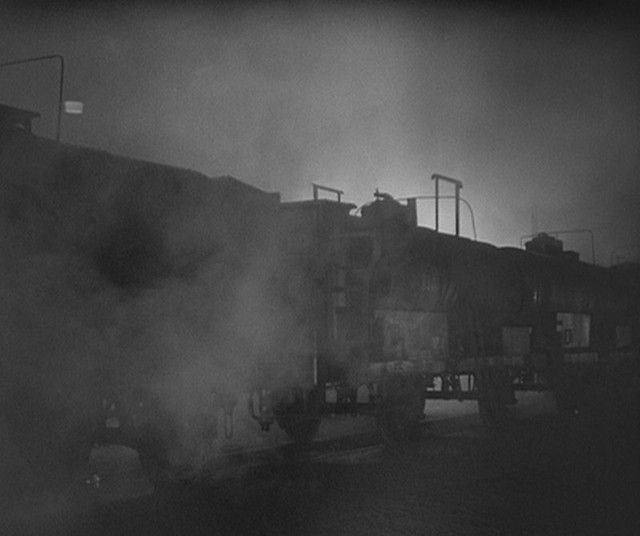
by watching films specifically for trains, and then looking for frames to capture, i feel i have formed a different relationship with these works. looking at the frames below i am struck by the differences in them. some are abstract and atmospheric, some geometrical like a rodchenko photo, and some feel very 19th century. oftentimes directors will employ many different styles within the same film. for example, i was very surprised when capturing frames from preston sturges' films, his photography is so incredibly stunning and diverse, and his love of the train and motion is always apparent.
anyway....


chantal akerman: les rendez-vous d'anna 1978
"anna's world is a fragmented universe of silent train stations and hotel rooms" ica london

american mutoscope & biograph co.: ghost train 1903
a train roars towards the camera, seen in the negative.
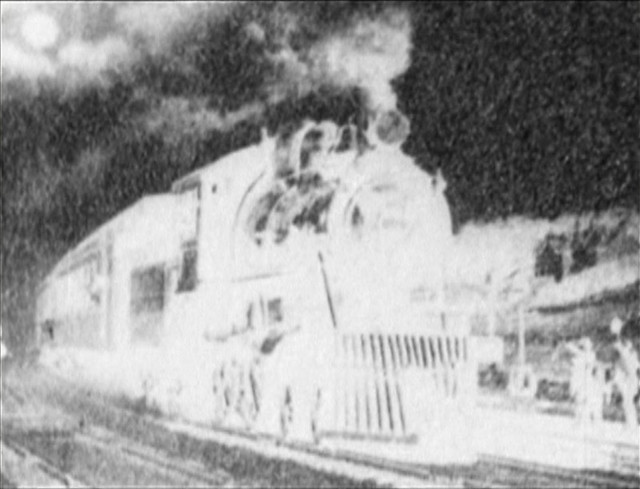
ghost train 1903

ken annakin: across the bridge 1957

nimród antal: *kontroll 2003

frederick armitage & a.e. weed: down the hudson 1903
an almost structuralist film with a train and boat racing down the hudson.

hal ashby: the last detail 1973, bound for glory 1976

richard attenborough: gandhi 1982

bruce baillie: castro street 1964

ingmar bergman: the silence 1963
certainly the most artificial train ride of the list, stranger than the opening of fellini's 8 1/2. the opening sequence is a train ride, with an unsettling drone soundtrack, and lights flashing on the boys face, bringing him in and out of the darkness. the rear-screen projection landscape is truly gorgeous as well, and the implied heat (the sweat on the women's figures) is contradicted by the artifice of bergman's visual style.
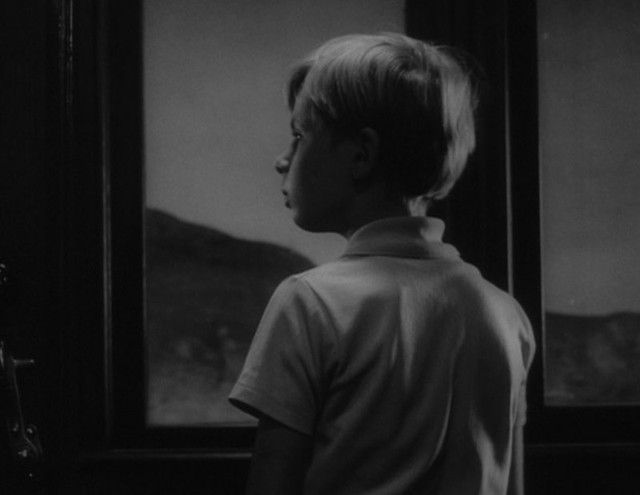
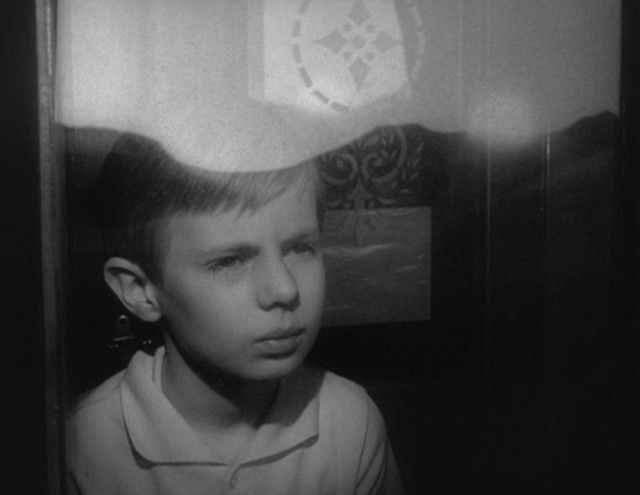

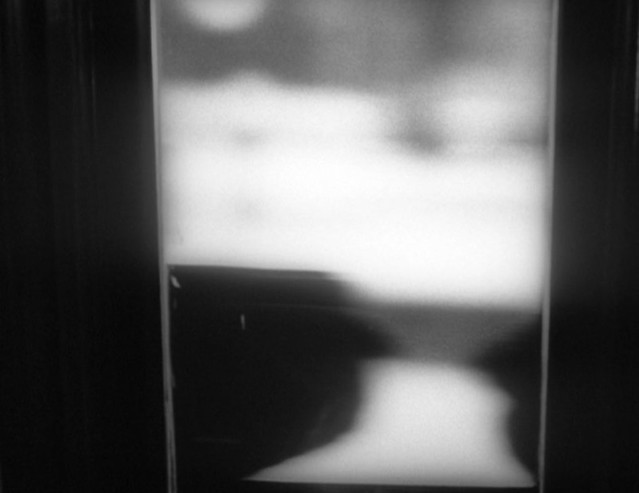
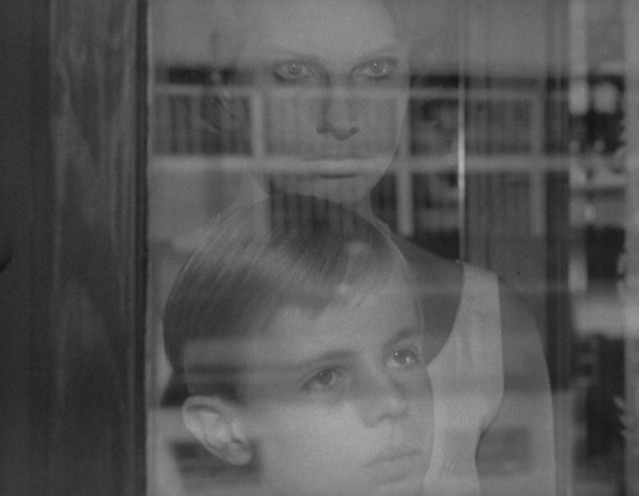
the silence 1963

bernardo bertolucci: the conformist 1970

phillip borsos: *the grey fox 1983
stagecoach robber is released from prison after 30 years, and starts again to rob trains.

robert bresson: pickpocket 1959
classic subway movie.

martin brest: midnight run 1988
when you can't fly, you take the train.

clarence brown: possessed 1931
in the opening scene, joan crawford looks into the windows of a train as it rolls into town and peers into the first class compartments.

neil burger: the illusionist 2006

frank capra: it happened one night 1934, mr. deeds goes to town 1936
(it happened...): clark gable gets slowed down by a passing train.

michael cimino: heaven's gate 1980

shirley clarke: the cool world 1964

rene clement: la bataille du rail 1946

coen brothers: o brother, where art thou? 2000

joseph cornell/ stan brakhage: the wonder ring 1955

michael crichton: *the first great train robbery 1979

jules dassin: the naked city 1948
lots of great subway shots, docunoir style.

the naked city 1948

delmer daves: 3:10 to yuma 1957
the 3:10 train at the end of the film.
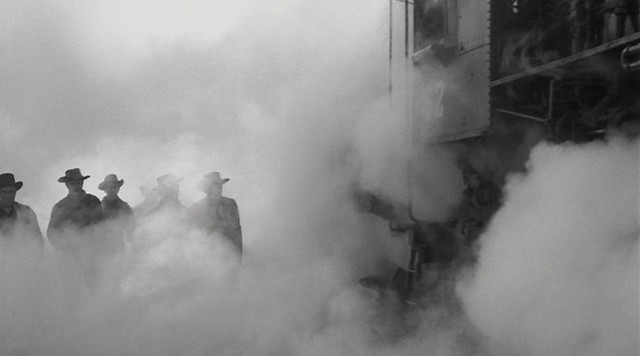

3:10 to yuma 1957

andrew davis: the fugitive 1993 (+ the t.v. show)
quite stimulating train crash in the beginning.

william dieterle: *peking express 1951

julien duvivier: *anna karenina 1948

w.s. van dyke: after the thin man 1936

charles and ray eames: toccata for toy trains 1959

clint eastwood: high plains drifter 1973, pale rider 1985, unforgiven 1992

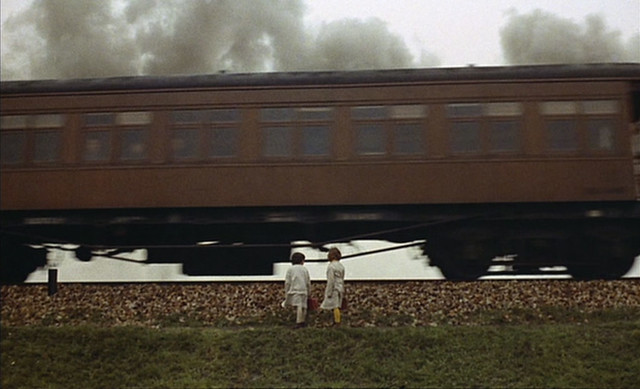
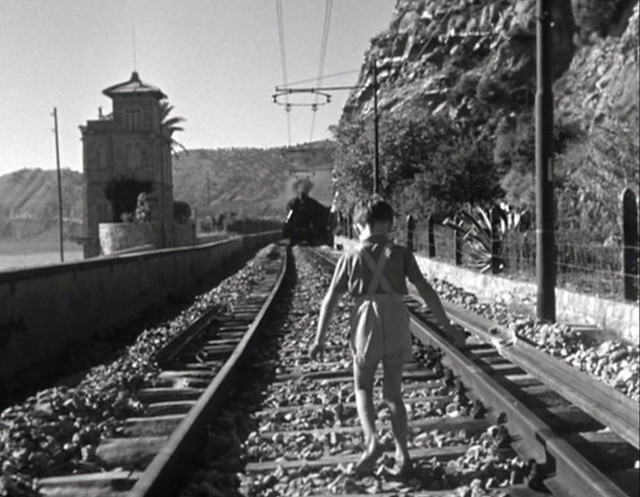
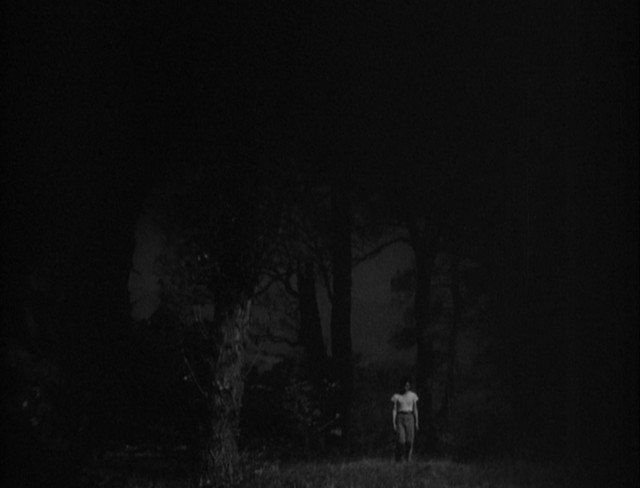
victor erice: the spirit of the beehive 1973
the young girls hang out by the tracks and watch trains go by.
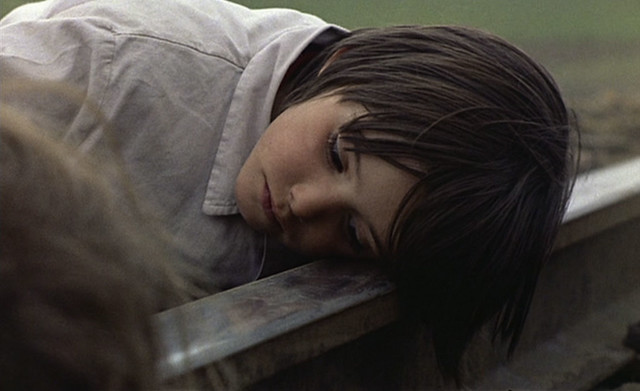


the spirit of the beehive 1973

federico fellini: i vitelloni 1953, 1963

john ford: *the iron horse 1924, 3 godfathers 1948, the quiet man 1952, the man who shot liberty valance 1962.
(3 godfathers): beautiful red train, and repetition of "drag her" (meaning get the train going).
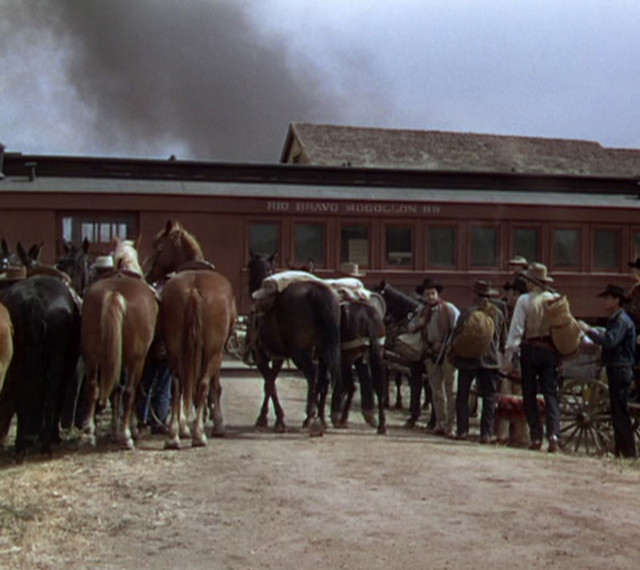
3 godfathers 1948 "drag her"


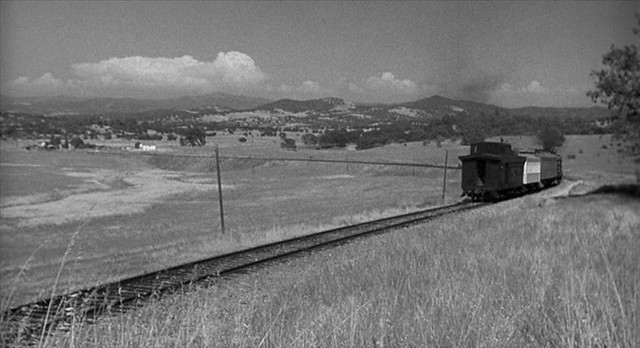
the man who shot liberty valance 1962

john frankenheimer: the train 1964
getting back nazi-stolen art using trains.

william friedkin: the french connection 1971

sam fuller: pickup on south street 1953, house of bamboo 1955
(pickup on....): the great pickpocket scene during the opening scene on the subway, similar to bresson's masterpiece, and a few years earlier.

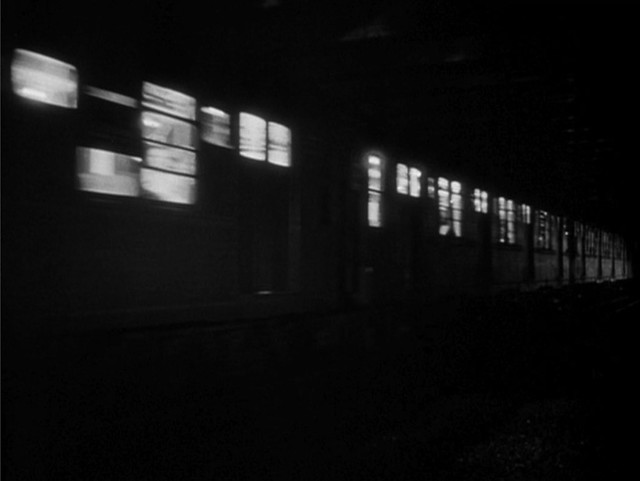
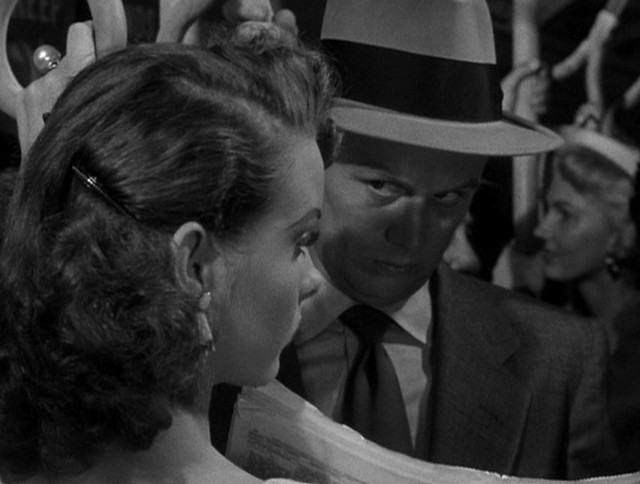
pickup on south street 1953

ernie gehr: see the miles brothers.

michel gondry: eternal sunshine of the spotless mind 2004

pierre granier-deferre: *le train 1973
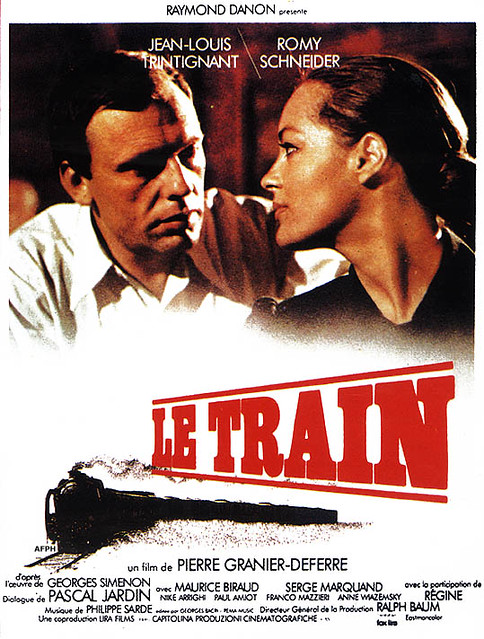


fred guiol: *duck soup 1927 (laurel and hardy)

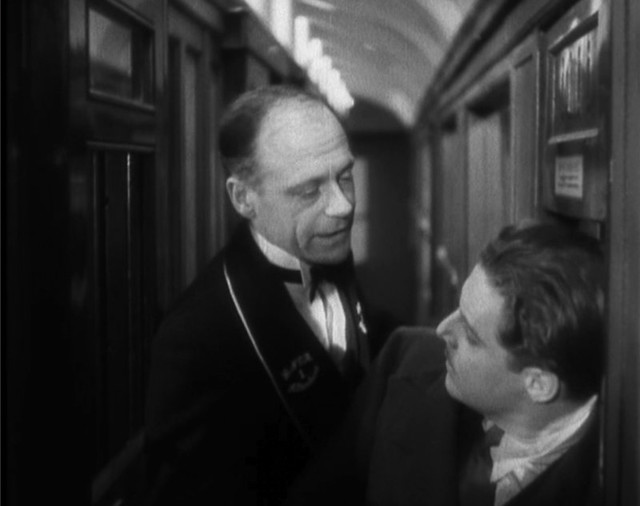
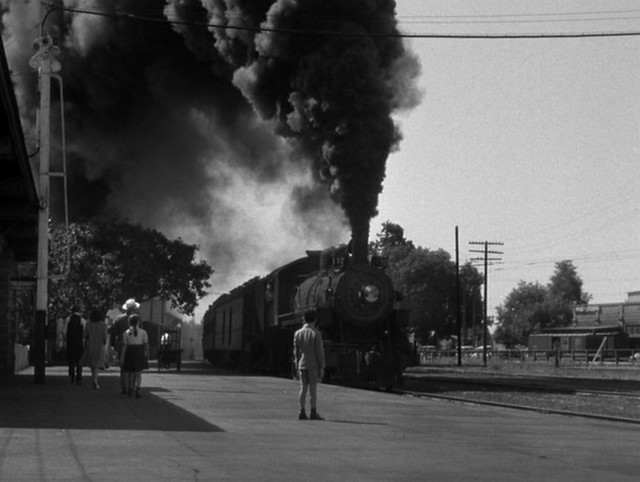
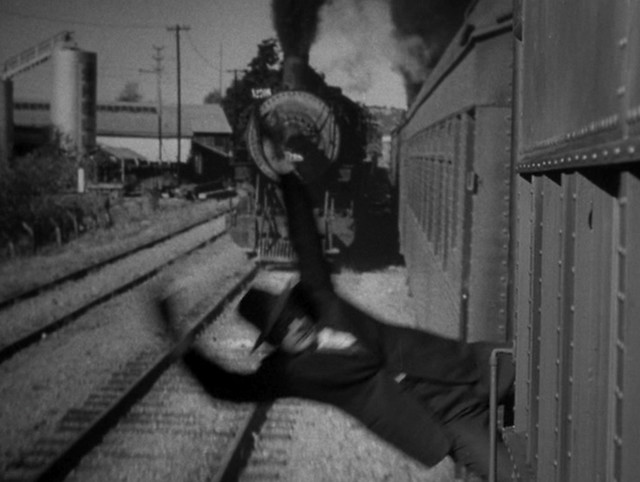
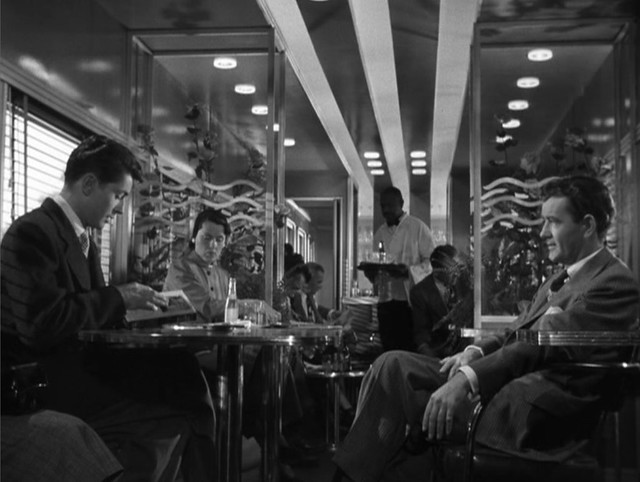
alfred hitchcock: the 39 steps 1935, the lady vanishes 1938, suspicion 1941, saboteur 1942, shadow of a doubt 1943, strangers on a train 1951, north by northwest 1959
hitchcock sure loved filming trains, cars, and buses.
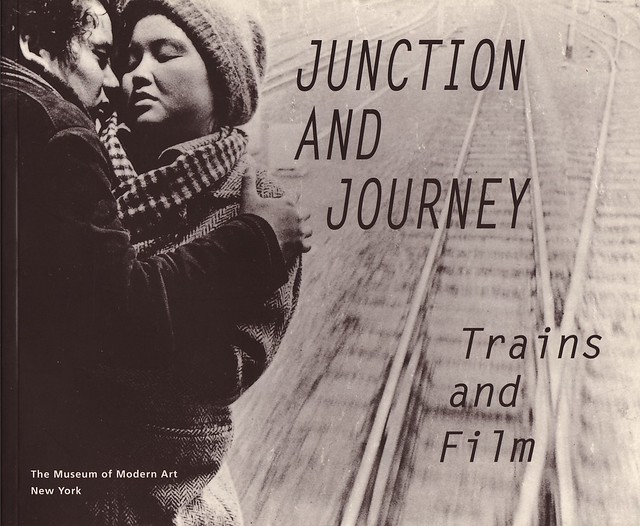
see article in junction and journey: trains and film, moma.


the 39 steps 1935


shadow of a doubt 1943


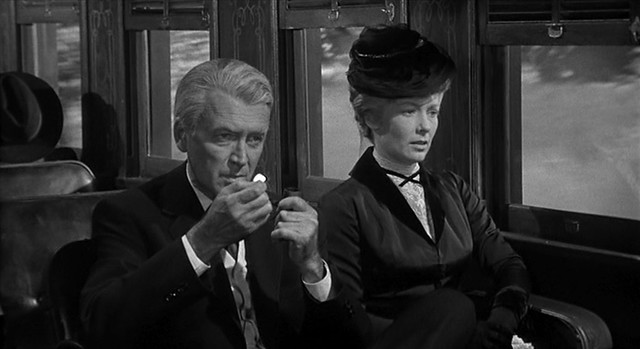
strangers on a train 1951

h. bruce humberstone: sun valley serenade 1941
dandridge and the nicholas brothers begin singing and dancing in a train station.

john huston: treasure of the sierra madre 1948, the misfits 1961
(treasure of...): great gunfight in the beginning on a train, with humphrey bogart, walter huston and tim holt.
(the misfits): clark gable sees off one of his many gals at the train station.

ken jacobs: georgetown loop 1995/96, the disorient express 1995/96

jim jarmusch: mystery train 1989, dead man 1995
(dead man): opens on a train, photography by robby müller.

dead man 1995

norman jewison: in the heat of the night 1967

wong kar-wai: 2046 2004
"if you want to remember and revisit your past, take the train 2046."

2046 2004

buster keaton: go west 1925

krzysztof kieslowski: *blind chance 1987, la double vie de veronique 1991
(la double vie...): the polish veronika practices her singing on the street train as her boyfriend drives behind on his motorcycle and gazes at her.

andrei konchalovsky: runaway train 1985
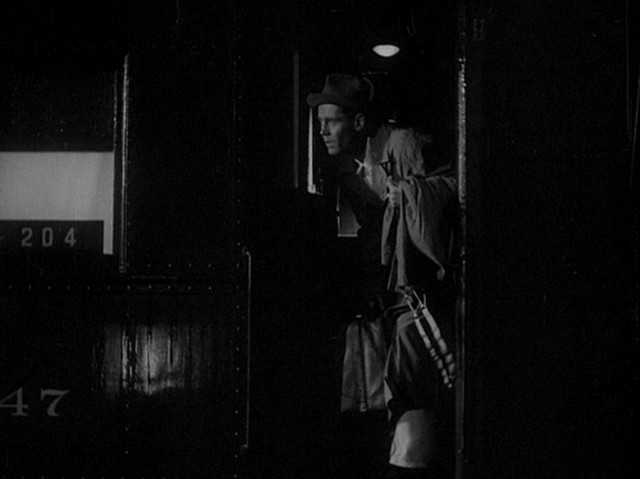
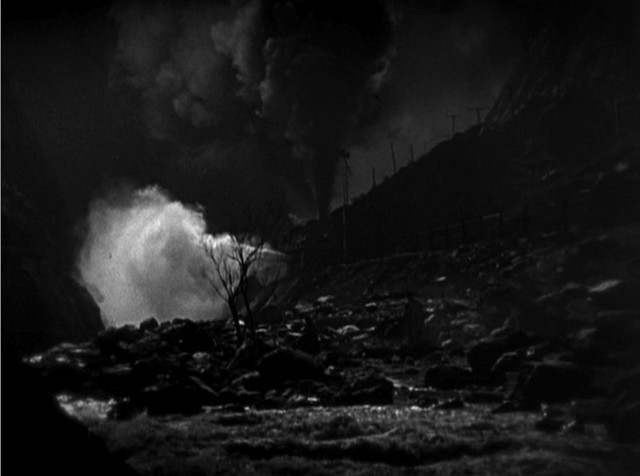
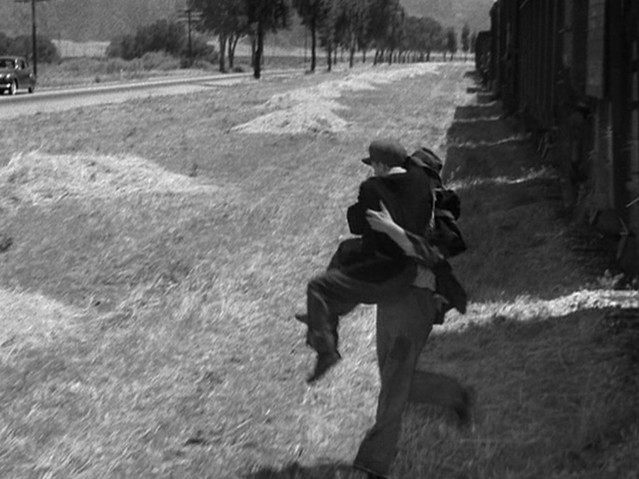
akira kurosawa script about 2 escape prisoners on a train, with beautifully abstracted landscape shots.

akira kurosawa: high and low 1963, dô desu ka den 1970
(high and low): train sequences where they are trying to catch the kidnapper.
(dô desu ka den): boy says "dô desu ka den" as he imagines he is operating a train.

fritz lang: das testament des dr. mabuse 1933, the return of frank james 1940, ministry of fear 1944
(the return of...): nice sequence at the end with a train at night. also, the railroad company is hunting henry fonda.


das testament des dr. mabuse 1933

claude lanzmann: *shoah 1985

david lean: brief encounter 1945, the bridge on the river kwai 1957, lawrence of arabia 1962, doctor zhivago 1965
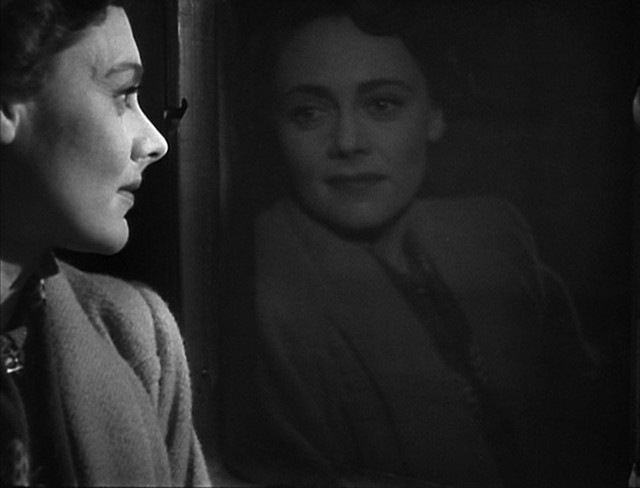
(brief encounter): set around a train station. has a beautiful shot of celia johnson dreaming of her new love, as she stares out the train window.


brief encounter 1945

sergio leone: once upon a time in the west 1968

mervyn leroy: random harvest 1942

richard linklater: before sunrise 1995
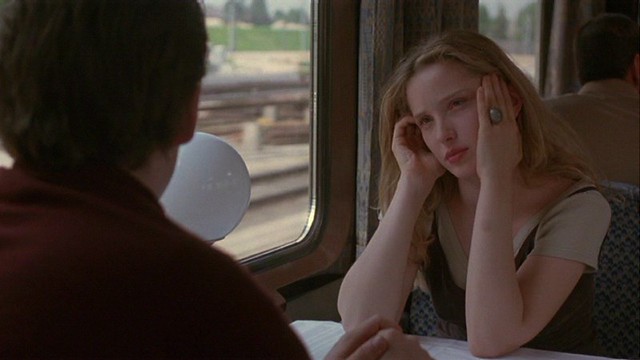
love on a train.

before sunrise 1995

sidney lumet: murder on the orient express 1974

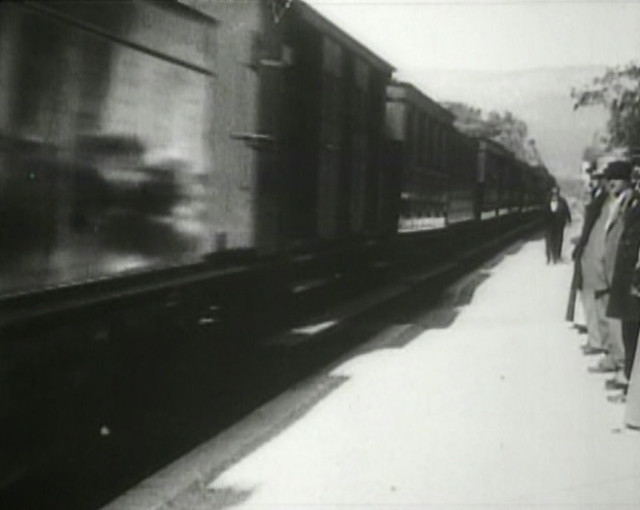
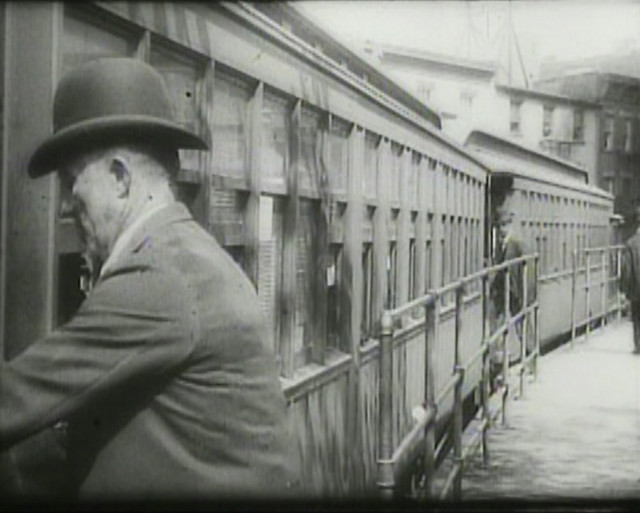
lumiere brothers: arrivee du train en gare de la ciotat 1895, panorama de l'arrivee en gare de priccache pris du train, arrivee d'un train a perrache, new york: arrivee d'un train a battery place, brooklyn: fulton street, new york: whitehall street
the lumiere's films are still the most beautiful train films of all.

arrivee du train en gare de la ciotat 1895

arrivee d'un train a perrache, new york: arrivee d'un train a battery place

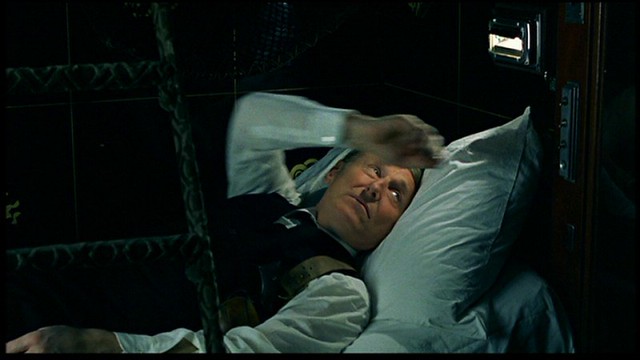
david lynch: the elephant man 1980

adrian lyne: jacob's ladder 1990

alexander mackendrick: the ladykillers 1955

terrence malick: days of heaven 1978

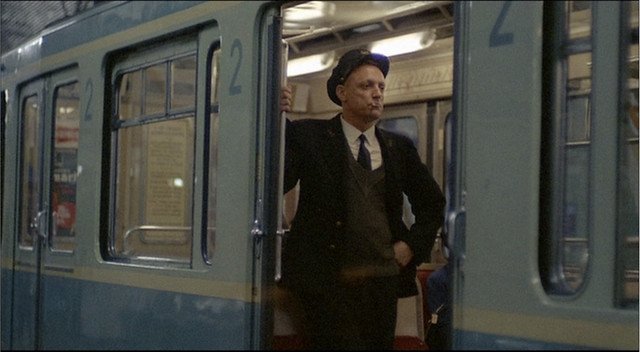
louis malle: *zazie dans le métro 1960, au revoir, les enfants 1987

joseph l. mankiewicz: people will talk 1951
cary grant obsessed with playing with his toy trains

thomas mccarthy: *the station agent 2003

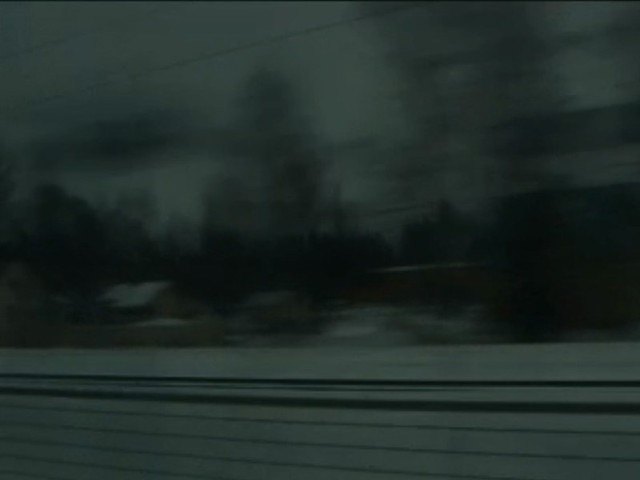
jonas mekas: friday march. 16th, 2007 i take helsinki-tampere train. not much snow 2007
snowy landscape seen from a train.

friday march. 16th, 2007 i take helsinki-tampere train. not much snow 2007

jean-pierre melville: le samouraï 1967, le cercle rouge 1970, un flic 1972
(le samaurai): jef costello (alain delon) gets shot on a pedestrian bridge over train tracks with the sound of passing trains, and later uses the paris metro to elude the police.


le samouraï 1967

le cercle rouge 1970

jean michelson & m.g. macpherson: "oil" a symphony in motion 1933
a story of oil and technology, opens with train zooming past and going into soft focus.

the miles brothers: a trip down market street 1906
+ernie gehr: eureka 1974
(eureka): slows down and beautifies a trip down market street 1906.

vincente minnelli: meet me in st. louis 1944

f.w. murnau: sunrise: a song of two humans 1927

james neilson: *night passage 1957

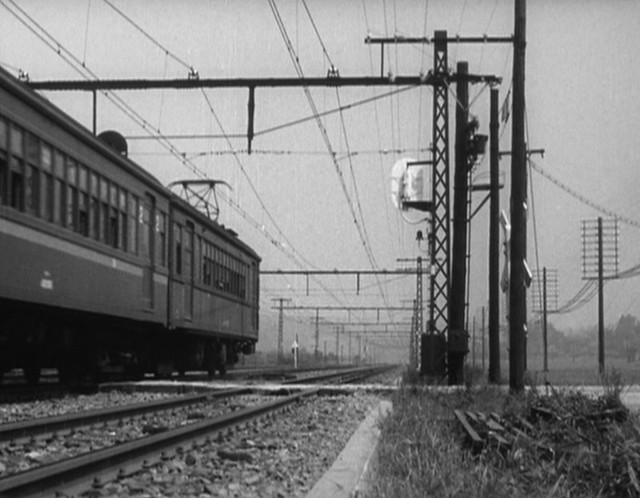
yasujiro ozu: a story of floating weeds 1934, *there was a father 1942, late spring 1949, early summer 1951, tokyo story 1953, early spring 1956, *equinox flower 1958, floating weeds 1959
(early summer): brief but beautiful, also toy trains for the kids.
(late spring): nice transit sequence where ozu really dwells on the sounds and visual rhythms of train travel.

"almost all his films include scenes with trains, and in many of them the final sequence is either in or near a train. the reason... is the train remains a vehicle of mystery and change. the mournful sound of a train in the distance, the idea of all those people being carried away to begin life anew elsewhere, the longing or nostalgia for travel".
donald richie

late spring 1949

edwin s. porter: the great train robbery 1903

gerald potterton: *the railrodder 1965
1965 short comedy film released by the national film board of canada and starring buster keaton in one of his final film roles (it was also his final silent film insomuch as the film contains no dialogue).

michael powell & emeric pressburger: 49th parallel 1941, i know where i'm going 1945, the red shoes 1948
(i know...): the beautiful train en route to the island of killoran.
(49th parallel): the strange out-door train ride the three nazi's take and the final entrapment on the train to america with raymond massey.


49th parallel 1941

satyajit ray: pather panchali 1955

jurgen reble: chicago 1996
reble shot film from a train in chicago and "worked on the material using a bleaching bath", thomas koner did the sound.

carol reed: *night train to munich 1940

jean renoir: la bete humaine 1938
jean gabin as train driver/murderer.

la bete humaine 1938

walter ruttmann: berlin, symphony of a city 1927

john sayles: matewan 1987

joseph sargent: the taking of pelham one two three 1974
mostly shot in the nyc subway.


the taking of pelham one two three 1974

john schlesinger: darling 1965
not a film or director i like much, but the train scene with dirk bogarde is quite good, especially with the cigarette continuity mistake.

charles schram: *arrivée d'un train à huy 1897

martin scorsese: *boxcar bertha 1972

george b. seitz: danger lights 1930, life begins for andy hardy 1941, andy hardy's double life 1942
(danger lights): very long and beautiful train sequences in this film, especially at the end. amazing sound as well.

vittorio de sica: the children are watching us 1947, umberto d. 1952, stazione termini / indiscretion of an american wife 1953
(the children are...): cuckoldry interspersed with trains and train travel.

the children are watching us 1947


umberto d. 1952


don siegel: two mules for sister sara 1970, dirty harry 1971
(dirty harry): clint eastwood gets directed by the serial killer on san francisco's muni.

ralph steiner, willard van dyke and henwar rodakiewicz: the city 1939

josef von sternberg: shanghai express 1932

john sturges: bad day at black rock 1954, *last train from gun hill 1959

bad day at black rock 1954


last train from gun hill 1959

preston sturges: the lady eve 1941, sullivan's travels 1941, the palm beach story 1942, hail the conquering hero 1944
(sullivan's travels): having no money, joel mccrea and veronica lake use freight trains for transit.


the lady eve 1941


sullivan's travels 1941


hail the conquering hero 1944

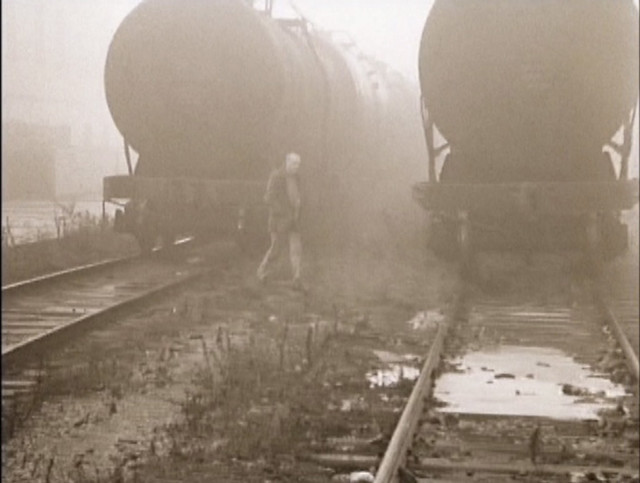
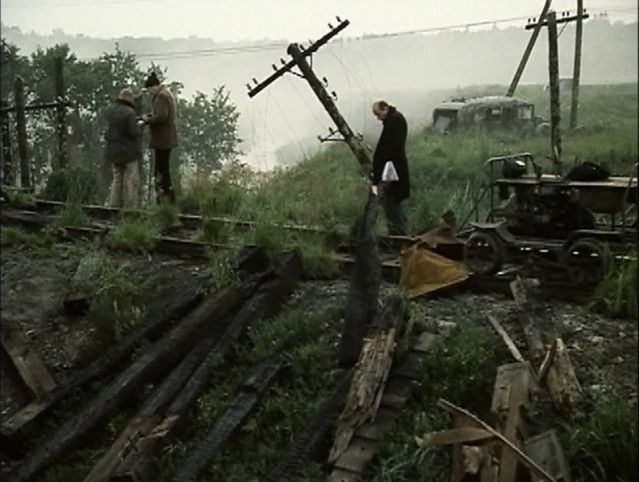
andrei tarkovsky: stalker 1979
trains are heard all through the first scene (they are not visible though), then we see the 3 characters using a trolley to get into the "zone". the trolley's aural rythym is beautifully transfixing.


stalker 1979

guillermo del toro: *mimic 1997

jacques tourneur: *days of glory 1944, night of the demon 1957
(night of the demon): final showdown on the train.

lars von trier: *zentropa 1991, dancer in the dark 2000
(dancer in the dark): the lovely sequence with bjork and peter stormare (in place of thom yorke) dueting on the train, filmed simultaneously with "the hundred eyes of lars von trier" (100 digital cameras).


dancer in the dark
2000

frank tuttle: this gun for hire 1942

w. s. van dyke: love on the run 1936
joan crawford and clark gable go to nice on a train.

king vidor: the crowd 1928, duel in the sun 1946, man without a star 1955
(man without a star): opens with kurk douglas hitching a ride on a train.

jean vigo: zéro de conduite: jeunes diables au collège 1933

william wellman: *buffalo bill 1944

wim wenders: the american friend 1977, paris, texas 1984

billy wilder: double indemnity 1944, some like it hot 1959


books:
-junction and journey: trains and film, moma.
-the railway journey: the industrialization and perception of time and space, by wolfgang schivelbusch, univ. of california press.
-lars von trier, by jack stevenson, bfi.
-trier on von trier, faber and faber.
-ozu, by donald richie, univ. of california press.
-darren olmond: journey time, steidl (exhibition catalogue).
"the focus of journey time is a trilogy of films devoted to remarkable trains. schwebebahn (1995) was shot in germany, upside-down on the first monorail. running in slow-motion, disorienting and defamiliarising, it conveys a sense of modernity’s aspirations being inverted in an era where much twentieth-century idealism now seems bankrupt. geisterbahn (1997) was filmed in vienna on an old-fashioned ghost train. shot in an expressionistic, shadowy style and punctuated by skulls, the journey becomes a gothic metaphor for mortal life. the third and final part of the trilogy was shot in 2006 on a hugely ambitious railway line built by the chinese government, leaving from beijing and stretching 1,200km into lhasa, striking deep into tibet." steidl site.


also of note, music-wise:
-herbert distel: railnotes, hat hut records, 1987/1990.
-steve reich: different trains, 1988.
-bill fontana: sound lines, 2005.

* indicates films i haven't seen.
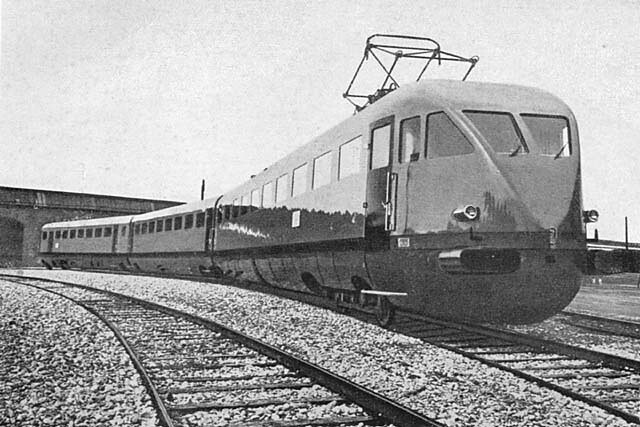
elettrotreno etr200 train, 1936 by italian architect giuseppe pagano


thanks to tarrl morley & shahn for numerous suggestions.

for my list of essential films, go here.

links:
wikipedia, rail transport in fiction
wikipedia, rail photography
train and stations in the movies
o. winston link
jimmie rodgers
johnny cash
imdb-trains

Sunday, March 25, 2007

ivanovo detstvo & die große stille

andrei tarkovsky: ivan's childhood 1963

tarkovsky said of ivan's childhood:
"generally people's memories are coloured by poetry. the most beautiful memories are those of childhood. of course memory has to be worked upon before it can become the basis of an artistic reconstruction of the past; and here it is important not to lose the particular emotional atmosphere without which a memory evoked in every detail merely gives rise to a bitter feeling of disappointment. there's an enormous difference, after all, between the way you remember the house in which you were born and which you haven't seen for years, and the actual sight of the house after a prolonged absence. usually the poetry of the memory is destroyed by confrontation with its origin" pp. 29

seeing this today in the theater, i was overwhelmed by the atmosphere tarkovsky created, and his subtle indications of war achieved through sound, costumes, blackened and abstracted landscapes, and flashing lights (falling from the sky). the war seemed distant and abstract, like it was not real. this "stratagem" turned ivan's childhood into a film about memory.


philip gröning: die große stille / into great silence 2005

i also watched into great silence today. overall, i was mostly impressed by the film's sound design. the sound of bells, near and far, is ubiquitous. sometimes you see the bell ringer, sometimes not. you also hear the beautiful singing of the monks throughout, their footsteps, the creaking of their chairs, and many other delicate moments. some are clear, some reverberate in the distance.
there are also moments of humor, where a monk plays with cats, some bulls decide to enter the monastery, but most especially when the monks go sledding.
i have to say i had a problem with some formal elements of the film. i found the editing to be often heavy handed, with a lack of timing and grace. the photography was very inconsistent. at times it was truly beautiful and mysterious (the images of water were breathtaking), at times very clumsy. digital grain often made its way into the film, used in a way that just drew to much attention to itself.
in the end though i found it to be a beautiful film-going experience, but frustrated by some of the aesthetic decisions.


books:
-sculpting in time, by andrei tarkovsky, univ. of texas press.

Saturday, March 24, 2007

dogs and stairs by terragni

2 images relating to giuseppe terragni, fascist architect.

photo by terragni


novocomun, como, main staircase, terragni

Tuesday, March 20, 2007

the naked city & the most dangerous game

realism & artificiality in 2 great american films.

watching 2 movies this evening, i found that my favourite part of each film contrasted realism & artificiality.

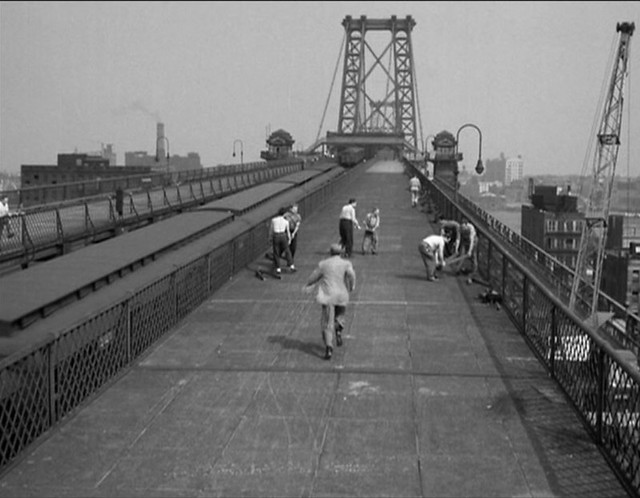
1. realism: the end of the docunoir film the naked city (jules dassin, 1948) where willie garzah runs to his death on the williamsburg bridge, hunted by barry fitzgerald. this film throughout has the grittiness of a neo-realist film, but especially the death scene at the end, which is really quite spectacular.

2. artificiality: the beginning of the most dangerous game (irving pichel, ernest b. schoedsack, 1932) where a (miniature) boat navigates through the rough sea (or a tub of water).
this artificiality has such a beauty to it, the real thing would pale in comparison. also of note is the very atmospheric hunting scene towards the end (see image). the sets of this film were recycled from king kong.
these scenes make me think of jack smith and his love of josef von sternberg's visual style, with its abstractions and bizarre artificiality.


naked city 1948 (d. jules dassin)


the most dangerous game 1932 (d. irving pichel, ernest b. schoedsack)
boat and bog

robby müller, cinematographer

robby müller (1940-)
bio from wim wenders site:
"robby mueller was born on april 4th 1940 in villemstad, curacao, on the dutch antilles. he studied at the filmacademy in holland from 1962 to 1964 and started to work as a director of photography soon afterwards".
certainly one of the most interesting living cinematographers, he has worked with wim wenders, lars von trier and jim jarmusch among others.
looking over his filmography i see some of my favourite films: the american friend, repo man, paris, texas, to live and die in l.a., down by law, barfly, mystery train, dead man, breaking the wave, and dancer in the dark.
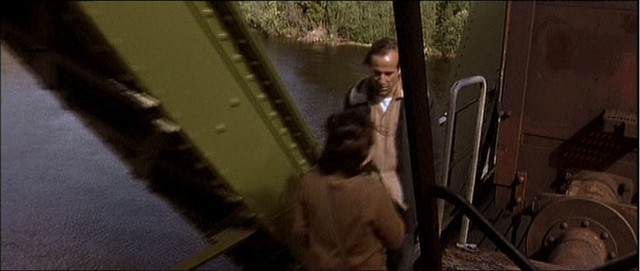
the end sequence of dead man, when the canoe drifts out into oblivion is truly sublime (see image below), and gives a good example of robby müller's magic.


paris, texas 1984 (d. wim wenders)


the american friend 1978 (d. wim wenders)


breaking the waves 1996 (d. lars von trier)


dead man 1995 (d. jim jarmusch)


down by law 1986 (d. jim jarmusch)


dancer in the dark 2000 (d. lars von trier)


some films:
-the scarlet letter 1973 (d. wim wenders)
-the wrong movement 1975 (d. wim wenders)
-kings of the road 1976 (d. wim wenders)
-the american friend 1978 (d. wim wenders)
-saint jack 1979 (d. peter bogdanovich)
-honeysuckle rose 1980 (d. jerry schatzberg)
-they all laughed 1981 (d. peter bogdanovich)
-tricheurs 1984 (d. barbet schroeder)
-repo man 1984 (d. alex cox)
-paris, texas 1984 (d. wim wenders)
-to live and die in l.a. (1985) (d. william friedkin)
-down by law 1986 (d. jim jarmusch)
-barfly 1987 (d. barbet schroeder)
-mystery train 1989 (d. jim jarmusch)
-korczak 1990 (d. andrzej wajda)
-until the end of the world 1991 (d. wim wenders)
-dead man 1995 (d. jim jarmusch)
-breaking the waves 1996 (d. lars von trier)
-buena vista social club (1999) (director of photography: amsterdam) (d. wim wenders)
-dancer in the dark 2000 (d. lars von trier)
-coffee and cigarettes 2003 twins & memphis version segments (d. jim jarmusch)

interview with robby müller.

Monday, March 19, 2007

panopticism

the panopticon is a prison building designed by english philosopher jeremy bentham in the late eighteenth century. the design allows the observer to view all prisoners without the prisoners being able to tell if they are being observed or not.

"hence the major effect of the panopticon: to induce in the inmate a state of conscious and permanent visibility that assures the automatic functioning of power. so to arrange things that the surveillance is permanent in its effects, even if it is discontinuous in its action; that the perfection of power should tend to render its actual exercise unnecessary; that this architectural apparatus should be a machine for creating and sustaining a power relation independent of the person who exercises it; in short, that the inmates should be caught up in a power situation of which they are themselves the bearers. to achieve this, it is at once too much and too little that the prisoner should be constantly observed by an inspector: too little, for what matters is that he knows himself to be observed; too much, because he has no need in fact of being so. in view of this, bentham laid down the principle that power should be visible and unverifiable. visible: the inmate will constantly have before his eyes the tall outline of the central tower from which he is spied upon. unverifiable: the inmate must never know whether he is being looked at at any one moment; but he must be sure that he may always be so. in order to make the presence or absence of the inspector unverifiable, so that the prisoners, in their cells, cannot even see a shadow, bentham envisaged not only venetian blinds on the windows of the central observation hall, but, on the inside, partitions that intersected the hall at right angles and, in order to pass from one quarter to the other, not doors but zig-zag openings; for the slightest noise, a gleam of light, a brightness in a half-opened door would betray the presence of the guardian. the panopticon is a machine for dissociating the see/being seen dyad: in the peripheric ring, one is totally seen, without ever seeing; in the central tower, one sees everything without ever being seen."

excerpt from 'panopticism' in michael foucault: discipline & punish: the birth of the prison.


Sunday, March 18, 2007

henwar rodakiewicz, water, light and the mechanized eye

henwar rodakiewicz (1903-1976): portrait of a young man (1925-31), 54 minutes.
from the dvd set unseen cinema, the mechanized eye, experiments in technique and form.

54 minutes of drifting clouds and smoke, pulsing mechanic devices, abstracted water, and trees and leaves being blown about by the wind.

one of the great things about bruce posner's box set unseen cinema, is that i continue to come across films and filmmakers that are truly amazing, and that i had never heard of.
i can't seem to find out much about henwar rodakiewicz except that he did the script for the film the city in 1939.
portrait of a young man truly is one of the great avant-garde films of the 30s, and also a great example of "the long form", or, films that are challenging in subject matter, but don't conform to the traditional short length of the avant-garde film (other examples are andy warhol's empire or michael snow's la region centrale).

here are some images from the film:


water


water


machines


machines


machines


water


smoke


leaves


clouds


water


for other studies of artists using nature, see woolgathersome's lovely study of snow crystals and ice palaces.
and machines in art on shahn's fine blog.

brice marden

went to the brice marden exhibition at the sfmoma today (3.18.2007)
and decided to decorate the pages of the art of memory (b)leating (l)ethargic (o)rnery (g)oat with some of his fine images.


Friday, March 16, 2007

abstractions from la cartomancienne

water sequences from jerome hill's film la cartomancienne / fortune teller, 1932.

this film contains 2 abstract water sequences that truly belong in the chronicles of the art of memory.

r. bruce eder explains that the film uses ideas about the transformation of the self that c.g. jung found in alchemical texts. although i find the rest of the film not exactly to my taste, the 2 abstract sequences certainly seem to be fine examples of the possibilities of alchemy and avant-garde film.
the first sequence looks like a stan brakhage hand-painted film, the second has a figure swimming under water, abstracted by the sun.

this film is on the disc the mechanized eye from the unseen cinema series curated by bruce posner.


(i will be posting more on the unseen cinema set, especially in my trains in cinema collection)

Wednesday, March 14, 2007

comments on 2 recent videos by m swiezynski

screening at the san francisco cinematheque of 2 videos by matthew swiezynski on february 25, 2007 at the yerba buena center for the arts, san francisco,
-rue de vaugirard, 1909, 1998
-l'amourphysique, 2005


l'amourphysique, 2005


here are the comments made by curator charles boone:

matthew swiezynski's work is an ongoing, metaphoric look at some of the micro aspects of our world: of viewing, of time, and of color to name but three. through techniques he has explored for a number of years, he creates (or, maybe, discovers) abstract images that are based in reality, joining them, finally, with sonic material meant to heighten their sense of abstraction. to this, he says, he adds a bit of melancholia. darker states of meaning are clearly implied in this work and it is through the pacing and duration of its sequences, among other techniques, that viewers might gain a clear sense of this darkness. one may even perceive a vein of religious sub-stratum in what he creates. the limitation of his palette to dark, or highly contrasting colors also heightens the palpable sense of melancholy in these works. these works appear to be monochromatic, but not quite. pacing and duration are important considerations for swiezynski. perhaps his works approach boredom. but in cage's formulation, if you are bored with something, engage with it again. if you are still bored with it, engage with it further. and so on. swiezynski's work may require a degree of patience, but i always come away from it with a deep sense of having experienced something about time and vision i had never witnessed before.

kon ichikawa's the burmese harp & fires on the plain

images from 2 films by kon ichikawa. the burmese harp 1956 & fires on the plain 1959.

the landscape photography and music in these 2 films is stunning. photography and music work together in both to such a degree that the dialogue becomes almost unnecessary (especially in fires on the plain).
there obviously is much more going on in these 2 works than the visuals, but for me they are the most striking element.
the cinematography in these films bring to mind many contemporary photographers, mainly thomas joshua cooper, hans danuser, emmet gowin, edward burtynsky, helene binet, elger esser, michael kenna, david maisel, olafur eliasson, axel hutte, and hiroshi sugimoto.

the burmese harp: cinematography by minoru yokoyama, music by akira ifukube.
fires on the plain: cinematography by setsuo kobayashi, music by yasushi akutagawa.

the burmese harp 1956:


fires on the plain 1959:


related photographic work:

hans danuser: landschaften, 1993-96


edward burtynsky: nickel tailings No. 35, 1996


helen binet: paysages en poésie


thomas joshua cooper: boca chica (little mouth), 1996-97

Sunday, March 11, 2007

winton c. hoch, cinematographer

winton c. hoch (1905-1979).
(pronounced "hoke" or "huke")
the great cinematographer winton c. hoch was born in iowa and was noted for his work in color cinematography, mainly for john ford.
joseph mcbride said of him in his book searching for john ford "trained as a research physicist at the california institute of technology, known as an expert in color cinematography.... did laboratory work on color processes for the technicolor corporation in the 1930s before becoming a cameraman".
hoch started doing documentaries in the 30s and 40s and later moved on to feature films. the best examples of his work are the films with john ford: 3 godfathers 1948, she wore a yellow ribbon 1949, the quiet man 1952, and the searchers 1959.
in these films one immediately notices the subtlety of his palette. the rich colors often contrast with the desert landscapes, and give the films an otherworldly quality.
as with joseph macdonald, his ability to shoot darkness, not unlike the darkness seen in film noir, really gives another dimension to ford's direction. for me, these films are just so beautiful to look at, they are like gazing at paintings in the louvre, but with the added dimension of time.


3 godfathers, 1948 (d. john ford)


she wore a yellow ribbon, 1949 (d. john ford)


the searchers, 1959 (d. john ford)


some films:
-dive bomber 1941 (d. michael curtiz)
-joan of arc 1948 (d. victor fleming)
-3 godfathers 1948 (d. john ford)
-tulsa 1949 (d. stuart heisler)
-she wore a yellow ribbon 1949 (d. john ford)
-the sundowners 1950 (d. george templeton)
-halls of montezuma (1950) (d. lewis milestone)
-bird of paradise 1951 (d. delmer daves)
-the quiet man 1952 (d. john ford)
-the redhead from wyoming 1953 (d. lee sholem)
-return to paradise 1953 (d. mark robson)
-mister robers 1955 (d. john ford)
-the searchers 1959 (d. john ford)
-jet pilot 1957 (d. josef von sternberg)
-the missouri traveler 1958 (d. jerry hopper)
-the big circus 1959 (d. joseph m. newman)

books:
-searching for john ford, by joseph mcbride, st. martins press.

links:
cinematographers
all movies
oscars
wikipedia

Thursday, March 8, 2007

joe macdonald, cinematographer

joseph macdonald (1906-1968).
the great cinematographer joseph macdonald was born in mexico city to american parents. he started working in the film industry in the early 1920s and became a director of photography in the 1940s. macdonald was long with 20th century-fox and worked with such great directors as john ford, henry hathaway, william wellman, elia kazan, samuel fuller and nicholas ray.

looking at his filmography, i realized he shot some of my favourite film noirs (call northside 777, panic in the streets, pickup on south street), and one of the greatest of john ford's westerns (my darling clementine).
his black and white photography in my darling clementine is truly stunning and calls to mind the great expressionist masters like lang, pabst, murnau (an obvious influence) and sternberg. his heavy use of blackness and darkness can be seen in the great docunoir by henry hathoway: call northside 777, and in the films panic in the streets, and pickup on south street.


my darling clemintine, 1946 (john ford)


jimmy steward in a panopticon in call northside 777, 1948 (henry hathoway)


panic in the streets, 1950 (elia kazan)


pickup on south street, 1953 (samuel fuller)


the true story of jesse james, 1957 (nicholas ray)


some films:
-wintertime 1943 (d. john brahm)
-the big noise 1944 (d. malcolm st. clair with laurel & hardy)
-shock 1946 (d. alfred l. werker)
-the dark corner 1946 (d. henry hathaway)
-my darling clementine 1946 (d. john ford)
-call northside 777 1948 (d. henry hathaway)
-the street with no name 1948 (d. william keighley)
-yellow sky 1948 (d. william wellman)
-down to the sea in ships 1949 (d. henry hathaway)
-it happens every spring 1949 (d. lloyd bacon)
-pinky 1949 (d. elia kazan)
-panic in the streets 1950 (d. elia kazan)
-you're in the navy now 1951 (d. henry hathaway)
-fourteen hours 1951 (d. henry hathaway)
-as young as you feel 1951 (d. harmon jones)
-viva zapata! 1952 (d. elia kazan)
-what price glory 1952 (d. john ford)
-niagara 1953 (d. henry hathaway)
-titanic 1953 (d. jean negulesco)
-pickup on south street 1953 (d. samuel fuller)
-how to marry a millionaire 1953 (d. jean negulesco)
-hell and high water 1954 (d. samuel fuller)
-broken lance 1954 (d. edward dmytryk)
-woman's world 1954 (d. jean negulesco)
-the racers 1955 (d. henry hathaway)
-house of bamboo 1955 (d. samuel fuller)
-bigger than life 1956 (d. nicholas ray)
-the true story of jesse james 1957 (d. nicholas ray)
-will success spoil rock hunter? 1957 (d. frank tashlin)
-the young lions (1958 (d. edward dmytryk)
-warlock 1959 (d. edward dmytryk)
-alvarez kelly 1966 (d. edward dmytryk)

Sunday, March 4, 2007

antonioni's l'eclisse & architettura e fascismo


michelangelo antonioni's film l'eclisse, 1962 and italian fascist architecture.

l'eclisse was antonioni's last film from the trilogy on modern malaise (or the 3rd part of a tetralogy that includes the red desert, 1964), and stars alain delon and monica vitti.
i have been wanting to do a good list of books on fascist architects for the art of memory, mainly monographs, and rewatching l'eclisse gave me the perfect excuse. antonioni photographs rome so beautifully in this movie (and also the fascist town in l'avventura) it inspired me to do a little more research on the district it was shot in. the end is especially beautiful, when delon and vitti are removed and we see quotidian life in this modernist suburb, much like jacques tati's playtime, 1967.

the majority of l'eclisse was filmed in the eur district of rome.

eur seen in l'eclisse

the eur (acronym of esposizione universale roma) was a new suburb intended for a universal exhibition celebrating fascist italy. it was planned in the 1930s and scheduled for 1942 but abandoned at the beginning of the war. the plan was by architect marcello piacentini, and only some of the work was carried out. the area chosen for the eur was about three miles south of the walls, near the river and the road to ostia. after the war, work continued there in a modernist style, including the palazzo dello sport (1958-60) by pier luigi nervi and annibale vitellozzi.

pier luigi nervi, palazzo dello sport, 1958-1960, eur rome

some of the more notable fascist architects were: giuseppe terragni, luigi moretti (architect of the watergate complex), figini & pollini, franco albini, adalberto libera (& malaparte), ernesto b. la padula, angiolo mazzoni, giuseppe pagano, pietro lombardi, giuseppe vaccaro, marcello piacentini, giovanni muzio, giovanni michelucci, ignazio gardella.

buildings in the eur, and related italian modernist architecture:


ernesto b. la padula, giovanni guerrini and mario romano, palazzo dealla civilta italiana, 1942, eur rome.


marcello piacentini, citta universitaria, 1932-35, eur rome


marcello piacentini, perspective drawing, 1938-1941, italy


pier luigi nervi, palace of water and light, perspective drawing, 1938, italy


adalberto libera, auditorium, perspective with statue, 1935, rome


adalberto libera (& malaparte), casa malaparte (lagerfeld photo) 1938-40 capri


luigi moretti, casa il girasole, via bruno buozzi, 1947-1950, roma


luigi moretti, commemorative chapel, 1940, rome


giuseppi terragni, casa del fascio, 1936, como


franco albini, la rinascente, 1957-61, rome


giuseppe vaccaro, palazzo delle poste e telegrafi, 1931-36, napoli


books (& articles) on antonioni:
-antonioni, by ian cameron & robin wood, praeger.
-seeing and nothingness, by j. hoberman, villiage voice.
-antonioni, or, the surface of the world, by seymour chatman, univ. of california press.
-the films of michelangelo antonioni, by peter brunette, cambridge univ. press.
-a vigilance of desire: antonioni's l'eclisse, by jonathan rosenbaum (found in the criterion dvd of l'eclisse).

books on fascist architects:
-franco albini: architecture and design, by stephen leet, princeton arch. press.
-franco albini: 1905 - 1977, by antonio piva and vittorio prinaelecta, electa.
-franco albini: zero gravity - costruire le modernita, by fulvio irace, electa.
-luigi figini/ gino pollini: opera completa, by vittorio gregotti and giovanni marzari, electa.
-ignazio gardella architetto 1905-1997: costruire le modernita, electa.
-adalberto libera: opera completa, electa.
-adalberto libera, by francesco garofalo and luca veresani, princeton arch. press.
-adalberto libera: de l'apres-guerre, centre georges pompidou.
-casa malaparte, by marida talmona, princeton arch. press.
-casa malaparte, by karl lagerfeld, steidl
-malaparte: a house like me, clarkson potter.
-pietro lombardi, architetto, by roberto luciani, officina edizioni.
-angiolo mazzoni (1894-1979): architetto ingegnere del ministero delle comunicazioni, by gabriella belli, skira.
-giovanni michelucci: 1891-1990, by claudia conforti, electa.
-luigi moretti : works and writings, by federico bucci, princeton arch. press.
-giovani muzio 1893-1982: opere, by fulvio irace, electa.
-muzio: l'architettura di giovanni muzio, editrice abitare segesta.
-ernesto b. la padula. opere e scritti, 1930-49, cluva.
-giuseppe pagano, by carlo melograni, il balcone.
-marcello piacentini: opere, 1903 - 1926, by arianna sara de rose, rranco cosimo panini.
-le opere maestre di marcello piacentini, by mario pisani, clear.
-guiseppe terragni, by bruno zevi, triangle architectural books.
-surface and symbol: giuseppe terragni and the italian rationalist movement, by thomas schumacher, princeton arch. press.
-the danteum: a study in the architecture of literature, by thomas schumacher, princeton arch. press.
-giuseppe terragni 1904-1943, by thomas schumacher, electa.
-giuseppe terragni: opera completa, electa.
-giuseppe terragni: transformations, decompositions, critiques, py peter Eisenman, monacelli.
-global architecture 74: giuseppe terragni, ga international.
-the terragni atlas: built architecture, skira.
-giuseppe terragni: opera completa 1925-1943, by ada francesca marciano, officina edizioni.
-giuseppe vaccaro, by marco mulazzani, electa.
-giuseppe vaccaro: architetture per bologna, by maristella casciato and giuliano gresleri, editrice compositori.

books on pier luigi nervi:
-aesthetics and technology in building, by pier luigi nervi, harvard univ. press.
-the works of pier luigi nervi, by ernesto rogers, praeger.
-pier luigi nervi: space and structural integrity, associated arts foundation.
-structures, by pier luigi nervi, f. w. dodge.

general books on modern architecture in italy:
-modernism in italian architecture 1890-1940, by richard etlin, mit.
-architettura e fascismo, by carlo cresti, vallecchi editore.
-the monumental era: european architecture and design 1929-1939, by franco borsi, lund humphries.
-italy builds. l'italia costruisce, by kidder smith, reinhold.
-the architecture of modern italy. visions of utopia, 1900-present, by terry kirk, princeton arch. press.
-architetti italiani 1930-1990, by marcello rebecchini, officina.

books on film & architecture (a partial list, none very interesting):
-architecture and film, princeton arch. press with the essay the consuming landscape: architecture in the films of michelangelo antonioni by mitchell schwarzer.
-zoomscape: architecture in motion and media, by mitchell schwarzer, princeton arch. press.
-cinematic urbanism: a history of the modern from reel to real, routledge.
-the architecture of image: existential space in cinema, by juhani pallasmaa, the finnish building ctr. (includes essay on the passenger).

carlo scarpa (later than the fascists, more on him in a later the art of memory)