Showing posts with label avant-garde film. Show all posts

Sunday, November 10, 2019

opus mors (the act of hearing with one’s own ears)


OPUS MORS by Jacob Kirkegaard caught my attention initially because of the relationship to Stan Brakhage's 1971 film The Act of Seeing with One's Own Eyes, a relationship I formed in my mind when I saw the postmortem concept of the work, but was later confirmed by Mr. Kirkegaard in a letter in terms of being an influence. It should be said that having followed Mr. Kirkegaard's work since his 2002 collaboration Soaked with Philip Jeck, everything by him warrants the utmost attention, especially if presented with such beyond lovely packaging, but the Brakhage relationship gave OPUS MORS a strong flash on my radar, and better than that initial interest, the release gave complete and utter satisfaction upon listening which is becoming more rare for this listener these days.

I first came across the Brakhage film my second year of film school, and my first exposure to his work. The influential filmmaker and teacher Saul Levine showing it warned of the content and perhaps this 19 year old kid was a bit nervous of a 32 minute film of cadavers being dissected? Yet not long after the film began a new way of seeing was initiated, and in a way a new method of interacting with not only art, but also with the world in a way that is not unlike the experiences of the great ascetics like St. Francis (this I should say is coming from a non-religious person). Looking back, part of the initial draw of Brakhage's film (one needs something initially to grab onto) was the deeply rich colors of Brakhage's photography, like a muted vividness with reds the like I had never seen (shown on a 16mm print).

Brakhage's work was initially also a bit tough for a youngster because of the lack of sound. The idea of watching film without sound was something that was "unheard" of for a neophyte like myself.  Today it is quite normal to see the opposite in the avant'garde film tradition in what could be described as music videos for sound artists where music is there to accompany pretty pictures or the pretty pictures are there to accompany pretty music. The rawness and almost asceticism of works like The Act of Seeing with One's Own Eyes is more of where this listener is coming from when engaging with a work like OPUS MORS. Through this exposure to asceticism, the viewer (with patience) finds themselves after a time (perhaps the unease and boredom needs a minute or two to dissipate) to be completely in a environment outside of their mind, full of lushness and perhaps slowly navigating toward a state of emptiness? Black walls lacking articulation slowly reveal complex details that are beautiful and in a way incomprehensible, not unlike Plato's Cave. And then as slowly as a subtle light reveals this magic, blackness beyond black again takes over one's vision and the memory of details reverberates through your consciousness.


Jacob Kirkeegard's OPUS MORS is very much in tune with works, often long form, that hover someplace between deep asceticism and unknown pleasures. The second LP as an example is basically field-recordings of "a full autopsy starting with opening the corpse, following the removal and slicing and cutting open all the organs and brain, to finally returning all the organs, closing and washing the corpse". There is a concentration on this disc, in Kirkegaard's words, on the "timbre" of the body. Much like Brakhage's film, with only the ears here at work (instead of the eyes) we are slowly taken from a state that is potentially quite uncomfortable as a spectator, to a meditation-like place where the subtle tone-color projecting from the LP via the speakers has almost psychedelic like qualities, strangeness in a way that relates so strongly to first hearing kosmische music or the painted light of a Brakhage film. The acoustics of the autopsy room commingling with the acoustics of my spacious living room was magical and mysterious, having a conversation that is in a way quite over my head but nice to bear witness to. The sound of my dog chewing a bone as Kirkegaard concentrates his microphone on the cleaning of the body by the medical examiner/pathologist had a very nice Cagean quality, but also intriguing as my pup Leviathan generally is uncomfortable with music I listen to but here he found himself in total peace with the sounds emanating from the speakers.

One reason in often returning to a work of art over the years (repeat listens or viewings) is upon initial exposure, the structure of the work is somewhat unclear, but the importance of its meaning is felt at some unconscious level. Over the years of interacting with works that fit this description, one finds the initial mystery of the structure to be just as beautiful as the structure that emerges or sometimes does not emerge, not unlike multiple readings of a Raymond Chandler novel with a somewhat nonsensical plot line. OPUS MORS enters your perception with about as an intense of a drone LP (I played it very loud) as one can experience. Mr. Kirkegaard explains the beginnings as "two ambient recordings made inside two morgues listens within the slow and deep tones from the facilities that keep the corpses cold." This sounds like a description of a space listening to a space, or sound worlds within sound worlds within sound worlds, not unlike his 2006 recording 4 Rooms recorded in deserted rooms inside the 'Zone of Alienation' of Chernobyl. Honestly with the number of drone recordings one can listen to in 2019, it is hard to really find a recording that speaks so clearly. It is like the experience of someone hard of hearing suddenly being able to clearly hear details. LP 1 OPUS MORTURARIUM we get into this highly articulated world of droning sounds with in sounds within sounds within sounds, where sound that can almost be described as minimalistic mud, becomes like a bathing light that gives warmth to one's experience as a listener, similar to sound healing work done by a skillful shamanic practitioner who can with such ease entice your mind into journeying to a place so clearly outside of itself with what seems like simple or even non-existent techniques.

This sound healing effect is also strongly present in disc 3 OPUS CREMATIO where mechanical drones vibrate so powerfully in my listening space that time is something no longer until it is disrupted by a quick transition to shoveling and static. Side B situates the listener in a wavering back and forth place somewhere between pulsing static and a warm drone where a nonphysical sense of emptiness and lack of presence is so beautifully perceived.


Concluding this deeply thought out and composed structure of the four LPs we find the last LP OPUS PUTESCO made up of of two tracks - decomposition internal & decomposition external, recorded at a forensic study facility with measurement microphones placed above decomposing corpses, and vibration sensors placed within the corpses. Rain and flies merge with what could be described as sounds never experienced. The listening pleasures that come from the level of artistry and skill of this LP is like a bit of cake that comes after a perfect meal. Not unlike the master field recorders and composers Yannick Dauby and Chris Watson, the construction of this final LP is like imagining a conductor guiding a large orchestra through a blissful score where the violins are flies, the percussion drops of rain, and the bass is decomposition. The lushness of the sounds discovered by Mr. Kirkegaard really boggles the mind here, like being temporarily in the mind of someone who truly hears and sees the world in a way that you know you are not capable of.

Here we are in Mid November and this release is clearly the best of 2019 for this listener. This site is really not about music/sound reviews, but here are some words that attempt to convey the feelings and emotions that Mr. Kirkegaard's set fires up within me, and why it will be amongst my favorites in the years to follow and constantly spinning and spinning on the player and traversing the walls of my memory.

*blog title suggestion in a letter by Jacob Kirkegaard

Sunday, September 22, 2019

léviathan grå tass


Matthew Swiezynski - Léviathan Grå Tass

4k video, environmental recordings direct from camera, mostly in sync. First of many works documenting Leviathan.

Monday, January 20, 2014

swann's way


matthew swiezynski swann 2003
ballet film

Saturday, November 30, 2013

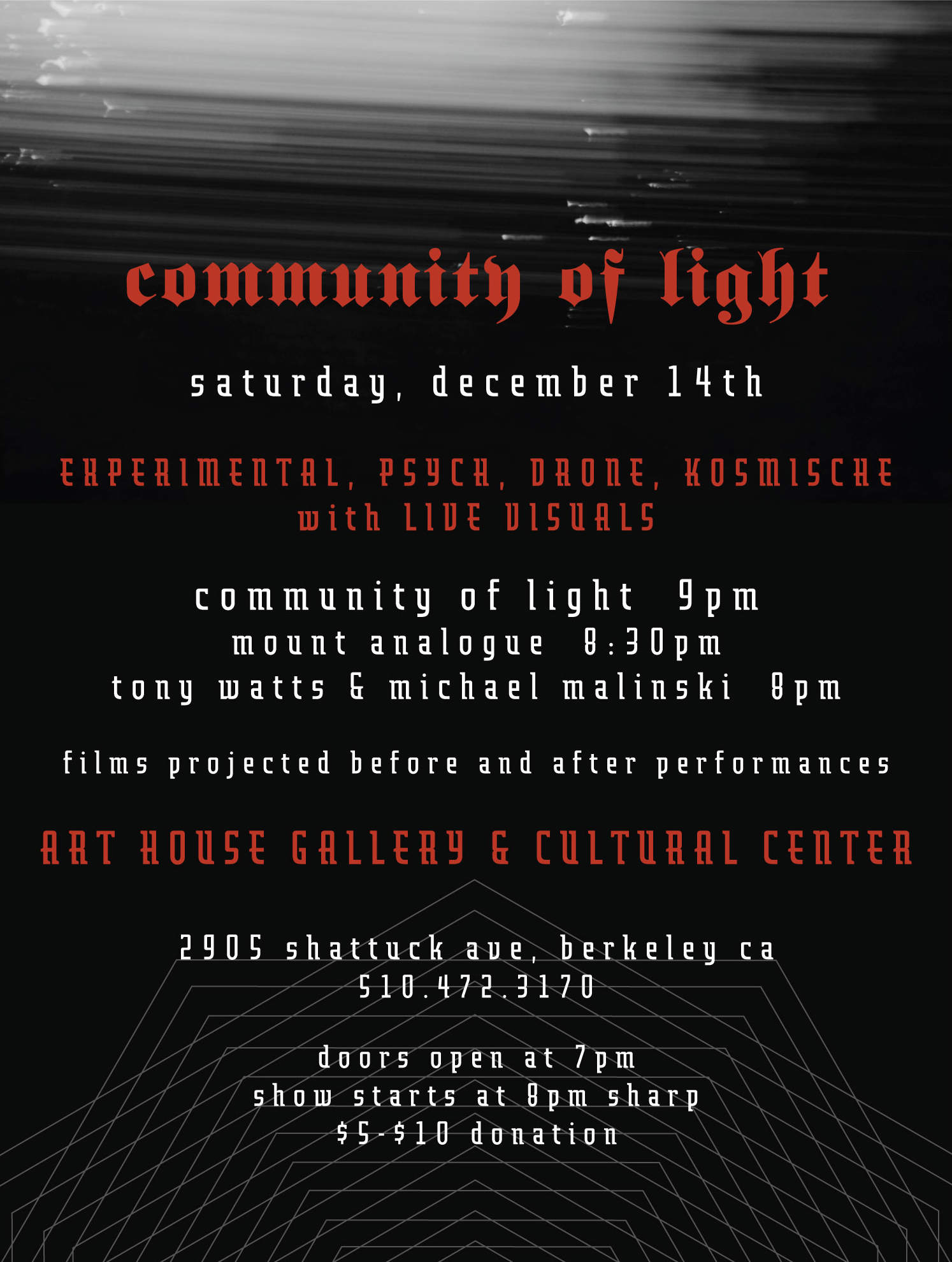
pursuers of the light: community of light & mount analogue, a night of live invisible birds music

(graphics by chi yun)

community of light & mount analogue live

saturday, december 14th, 2013

a night of experimental, psych, drone, kosmische music with live visuals

community of light :  matthew swiezynski, michael malinski and chi yun
mount analogue : chi yun and matthew swiezynski

community of light is a collective of artists & musicians working in the post kraut cosmic drone continuum which was initiated by mr. robert fludd and has come to full fruition in the twenty-first century in various forms.  specifically; as pursuers of the Light, which is often called Darkness, and a sound we call silence (with a method called night vision).

one critic of note has said of the community : "community of light reconceives a music that has for a long time been gathered from the invisible and most ancient of all communities, which has been in existence since the creation of the Cosmos, and will be with us through the end of time.  their music is highly influenced by krautrock, psychedelic, ambient, british folk, electronic and experimental and avant garde music."

bios :

chi yun is a visual artist, painter, designer and electronic ambient musician who moved to oakland after residing in brooklyn for many years.  her work has been shown in group exhibitions in new york and is based on geometric abstraction, surrealism, mysticism and shamanism. 

matthew swiezynski is an abstract film-maker and musician based in oakland california. he currently operates the record label invisible birds, which issues music and dvds by artists who work with abstraction, the environment, bird life, and the spiritual in art.  he is a member of the ingenting kollektiva with tarrl lightowler and has also released some solo recordings.

michael malinski (aka michael michael), originally trained in traditional darkroom fine art photography, has expanded into studies & works in paper making, ink drawing, jewelry design & construction, and music. his work, often based on dreams and subconscious states, has shown in solo & group exhibitions in and around chicago, new york, tucson and san francisco. he currently resides in cherryland.


show info :

community of light: 9pm
matthew swiezynski: guitar, baritone guitar, delay/reverb devises
michael malinski: synthesizer, bass, prayer bowl, vocals
chi yun: synthesizer, electronics, vocals

mount analogue: 8:30pm
chi yun: synthesizer, electronics, vocals
matthew swiezynski: guitar, baritone guitar, delay/reverb devises

tony watts & micheal malinski: 8:00pm sharp
tony watts: guitar, harmonica
michael malinski: percussions, bass

also featuring :


ambient sound/visual performance: 10pm
music by silver bough (harmonium and acoustic guitar), and films by matthew swiezynski

video/sound projections throughout the night
by michael malinski, matthew swiezynski, sonia chandra, tarrl lightowler and chi yun

the art house gallery & cultural center
2905 shattuck ave.
berkeley, ca 94705
510.472.3170

doors open at 7pm
show starts 8pm sharp
$5  - $10 donation

food, tea and beverages available

Wednesday, September 25, 2013

in the shadow's light


visual accompaniment to north palace, music and image by tomonari nozaki

 listen, it is the same with the morning rain
when you lift up the curtains of water
to venture out, and further than color,
into the unknown of puddles and shadows.

yves bonnefoy, from the edge of the woods,
  from in the shadow's light, 1987
translated by john naughton

Thursday, June 13, 2013

oh, my beloved, allow my kisses to speak for me


matthew swiezynski  juliette  1998, 16mm (excerpt)

magic hour film. shot in huntington park, san francisco
sound by tarrl lightowler and matthew swiezynski, 1998
modifying a 78 rmp record with a reel to reel deck

soon to be released on bluray on invisible birds with a
second 16mm film from the same period

(film title and entry title from the marquis de sade's juliette,
first published in 1797)

Thursday, March 7, 2013

salò o le 120 giornate di sodoma


matthew swiezynski  also salo  1996
multiple pass destruction of pasolini's salò o le 120 giornate di sodoma

composed during an editing class with the great mark lapore

Friday, March 1, 2013

le vieux paris (illumination of detail)


matthew swiezynski  rue de vaugirard, 1909  1998

video which came out of a failed 16 mm film project. originally photographed in san francisco, only in locations where the cables transporting the cable cars could be heard. the ambiance of the cables would be the soundtrack.
once failed; the film was transferred to video, and then rephotographed with a video camera, with the video playing in various slow motions, and a contact mic on the screen to bring attention to the rhythms and allow the films colours to create timbre.

also inspired by eugène atget and charles marville's photographic work, capturing a subtle otherworldly quality from the decay of a soon to be destroyed old paris (pre haussmann plan).

books :

- eugène atget - the work of atget: the art of old paris - moma - 1982 (plus the other three other moma books published for the exhibitions on atget's life and work)
- eugène atget - atget's seven albums - yale university press - 1992
- eugène atget - atget paris - gingko - 1992
- eugène atget - atget the pioneer - prestel - 2000
- eugène atget - atget - moma - 2000
- eugène atget - atget: paris in detail - flammarion - 2002
- eugène atget - paris as gameboard: man ray's atgets - columbia university - 2002
- eugène atget/berenice abbott - berenice abbott/eugène atget - arena editions - 2002

- charles marville - marville paris - éditions hazan - 1994
- charles marville - charles marville - centre national de la photographie, paris - 1996

- françois  loyer - paris xix siecle: l'immeuble et la rue - éditions hazan - 1987

Tuesday, February 26, 2013

enneige


matthew swiezynski  enneige  1999, 16mm

music : très lent by tarrl lightowler & matthew swiezynski, which includes 840 layers of
erik satie's vexations. layers recorded on a reel to reel with the erase head covered up.
new melodic elements added in 2013.
actress : madeleine bonn
this version is from a 16mm transfer to vhs, then transferred to the computer. invisible birds is hoping to get some funding to transfer numerous 16mm films directly to hd video for a bluray release. any assistants or ideas please contact us at invisiblebirds at gmail

Friday, February 22, 2013

l'inconnu du nord-express

matthew swiezynski  fludd's memory system  2007

train flicker film shot in crockett, california
no digital effects used, only aberrations discovered in final cut 7
through layering, contrast and opacity

(title : french for strangers on a train)

Friday, December 21, 2012

i'll probably never see you again (ask me why and ill spit in yr eye)

boomkat best of 2012 (via richard skelton)

here's one of those beautiful drone albums that should resonate with anyone keen on something to follow stars of the lid, the caretaker, or basinski. the ingenting kollektiva remains something of a mystery both to us and, so it seems, to the rest of the world. some information about their ideas are available (thanks to the impressionistic "art of memory" blog run by the kollectiva's m. swiezynski), but much remains purposefully arcane, which suits their smoke and mirror approach to sound design. the kollectiva's first album seemed an homage to ingmar bergman's definition of nothingness, in spanning the existential gap between the mundane and the eternal void. it also channelled a zeitgeist that threaded together various pieces of music and film from 1969, but the results of that project formed an ethereal set of dronemuzik that found a particular voice that transcended the cultural references.

the ghostly mood and nocturnal spell of their first album continues here on lost beyond telling, tracking further back in time with references to messiaen and baudelaire. and again, the kollecktiva finds itself making a slow, almost liturgical album of minimalist serenades through heavy processed instruments (guitar, cello, psaltry, etc.), field recordings, and manipulated pieces of crusty vinyl. a beautiful night sea music opens the album with pools of deep drones that gradually fracture into basinski-like looping patterns phased through a refined use tremolo and delay. comparatively scabrous textures churn through spiralling bird-song-like twitter on "the dark backward abysm of time" all leading up to the somber, twenty-three minute conclusion of damp field recordings and backmasked bells dragging through a darkened loveliness of oceanic driftscaping getting close to a salt marie celeste vibe. so nice!
the dvd portion of the program features two distinct visual aesthetics from within the kollektiva. the first four short films come by way of tarrl lightowler, who operates with an intense stroboscopic flickering of ever magnifying, ever vibrant images. thickets of wire, bright petals, chunks of ice, and piles of leaves are just a scant number of the images that lightowler projects in his videos, all siphoning out of a violent vortex of pulsing light. for all of its natural source materials, his videos are quite violent, countering the hypnotic wash of the sound, much of which originates from the material on the cd. brilliant stuff for sure, but please watch carefully, as retinal fatigue comes on very quickly with these films. the two latter films are from matthew swiezynski, whose videos are far murkier with whisps of fire and shadows of the landscape dominating the darkened field of vision. on both of his films, the sounds are wholly unique based on creepy sounding loops that could have been culled from tibetan horns and harmonium.

jim haynes on lost beyond telling
aquarius records

2 more reasons to buy an ingenting kollektiva release

Monday, May 21, 2012

alchemy of suffering


matthew swiezynski - my heart, delirious with sound - 2012 (in progress)
titles from monsieur baudelaire


Sunday, March 25, 2012

which he distorted by decorating with images

matthew swiezynski - which he distorted by decorating with images (2007/2012)

Sunday, March 18, 2012

plus rouge que le feu d'enfer


matthew swiezynski - forthcoming red camera film
to be released on oiseaux invisibles 2012

Sunday, February 19, 2012

he came dancing across the water with his galleons and guns looking for the new world in that palace in the sun

tarrl lightowler & matthew swiezynski - spectral anaylsis loops : deep in the glowing - 2012

"i attempt to render sections from the spectral analysis of things, to show them in many aspects and permutations simultaneously: their relations, sequences and oppositions.
unfortunately i am unable to observe things from all sides... i consider my so-called abstraction and my actual ambiguity to be moments of realism."
from hugo huppert's (in the prayer-milll's rattling) : a visit with paul celan in the book translating tradition.

Friday, January 14, 2011

it is as if he had stolen it

joseph cornell - rose hobart - 1936

sound, sound design, music in film

classic drone series - joseph cornell - rose hobart
music - nestor amaral and orchestra, looped

(link expired)

(thanks to sofia d'église for capturing sound)

Saturday, December 18, 2010

more light, and more darkness (program notes)


notes from the recent screening in los angeles,
thanks to those who came and sent kind words.
dvd out next year on invisible birds *

light in the darkness, or darkness moves
recent work by tarrl lightowler and matthew swiezynski
(and the ingenting kollektiva)

matthew swiezynski - i can feel the sea falling over my head - 2008-2010
filmed on christmas in 2008, this video documents some beautiful harmonium playing by d granahan accompanied by the sounds of a warm fireplace. the work starts out as a somewhat straightforward documentation, and then moves towards the end into abstraction, not dissimilar to alvin lucier's i am sitting in a room, though more akin to the transcendent qualities of indian classical music.
matthew swiezynski - it is something invisible - 2008-2010
the work for this video started by using a camera to collect images of trees using a method inspired by the films of michael snow and stan brakhage. this method involves spinning the camera around in the woods for as long as the body can tolerate (60-90 seconds), and then using a computer to layer and extend the raw footage. one way to think about the film is of a camera gathering small fragments of time from a forest that exists in larger periods of time (the life of the forest), and stretching these moments into something more appropriate to what the trees would see rather than someone passing through.
tarrl lightowler - as yet untitled - 2010
mr. lightowler has been making films of light on water for some 15 or more years. these 3 excerpts are from a longer planned work that involves an extremely refined way of thinking about and photographing the way light, movement and time leave an impression on water. this new work is accompanied by recordings made by the ingenting kollectiva on christmas 2009, edited by mr. lightowler.

Thursday, December 9, 2010

light in the darkness, or, darkness moves (la ville des anges)

recent films by tarrl lightowler and matthew swiezynski
premiering in los angeles on december 16th 2010, in echo park *.

matthew swiezynski - i can feel the sea falling over my head - 2009-2010
tarrl lightowler - as yet untitled - 2010
matthew swiezynski - it is something invisible - 2009-2010

*******


*******


********

"tarrl lightowler and matthew swiezynski are two filmmakers who make attempts at photographing "ingenting", or, what is not visible to the naked eye (nothingness).

with the use of many ingenting devises, they have chanced upon a few moments of visual phenomena, otherworldliness, minimalism and abstractions, in the tradition of the romantics and their observations of Natur.

these devises generally involve some sort of alembic apparatus; something to distill and abstract images and sound, and can include movement, time, layering, beauty, grain, ephemera, etc.

in addition, to find work that is in a tradition that would include: agnes martin, robert walser, mark rothko, morton feldman, melville, victor hugo, henri michaux, michael snow & ernie gehr, j. s. bach, philippe jaccottet, ingmar bergman & gunnar fischer and sven nykvist, bela tarr, eliane radigue, robert musil, marcel duchamp, robert bresson, john ford, thomas köner, terrence malik, andrei tarkovsky, h.p. lovecraft, powell & pressburger to name a few.

and in general: jazz, abstract expressionism, 20th century classical music, french, russian and german poetry & literature, renaissance, netherlandish and dutch painting, early music, birdsong, distant melodies, and drone music."

words by arthur de eriomém

Wednesday, August 18, 2010

the only sun / light in japanese architecture / lethe catastrophe point


black leader looking like an early sun photo
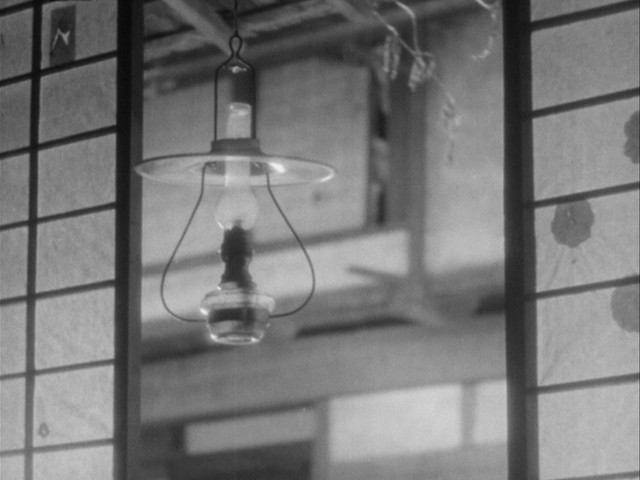
& window/light found in yasujirô ozu's the only son - 1936

...and i realized then that only in dim half-light is the true beauty of japanese lacquerware revealed... but in the still dimmer light of the candlestand, as i gazed at the trays and bowls standing in the shadows cast by that flickering point of flame, i discovered in the gloss of this lacquerware a depth and richness like that of a still, dark pond, a beauty i had not before seen.... to discover beauty in shadows, ultimately to guide shadows towards beauty's ends... and so it has come to be that the beauty of a japanese room depends on a variation of shadows, heavy shadows against light shadows - it has nothing else...
from jun'ichirō tanizaki's in praise of shadows

lethe:
[l. lēthē, a use of gr. ληθη forgetfulness, f. ληθ,
ablaut-var. of λαθ, root of λανθαυεσθας to forget.
in gr. ληθη is not the name of the river, though it occurs
as a personification; the river is ληθης 'water of lethe'].
1. gr. myth. a river in hades, the water of which produced,
in those who drank it, forgetfullnes of the past. hence,
the 'waters of oblivion', or forgetfullness of the past.
¶2. [?influenced by l. lēt(h)um.] death. rare.
3. atrib. and comb., as lethe-flood, lake, wharf; lethe-wards adv.
(oed definition)

catastrophe point #7 & #8 regular edition now available *

Wednesday, March 31, 2010

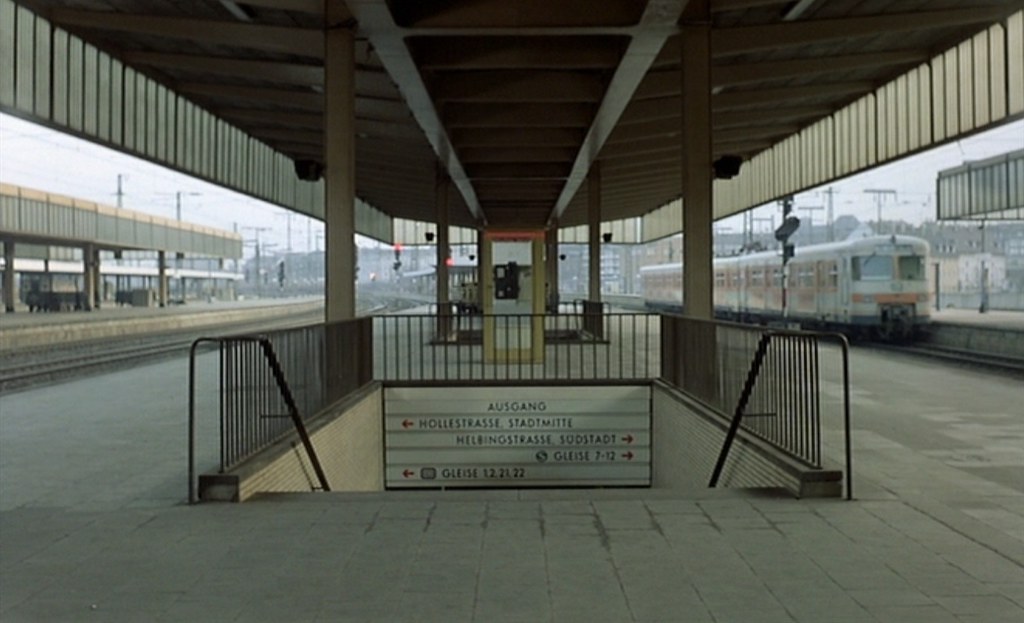
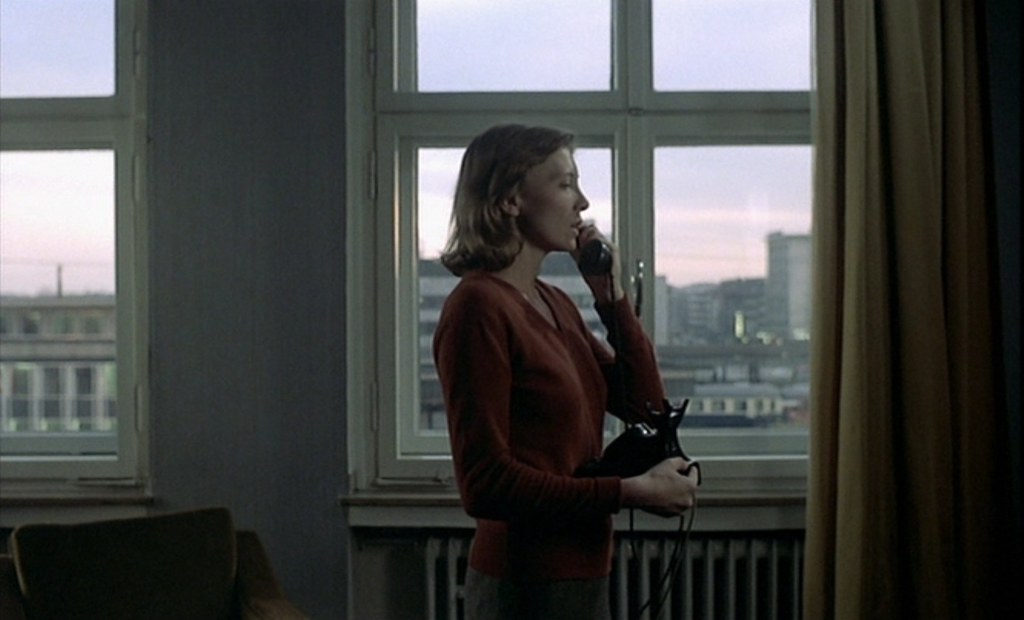
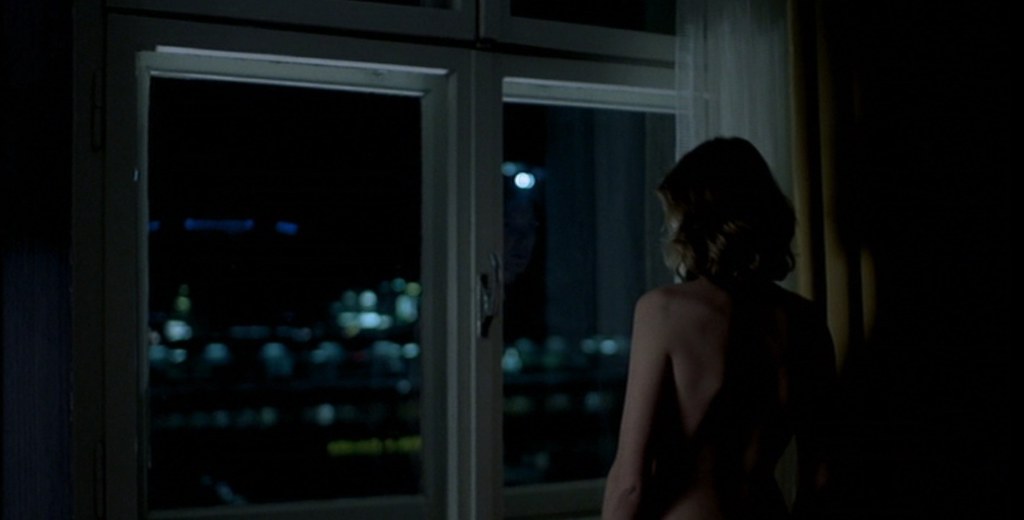
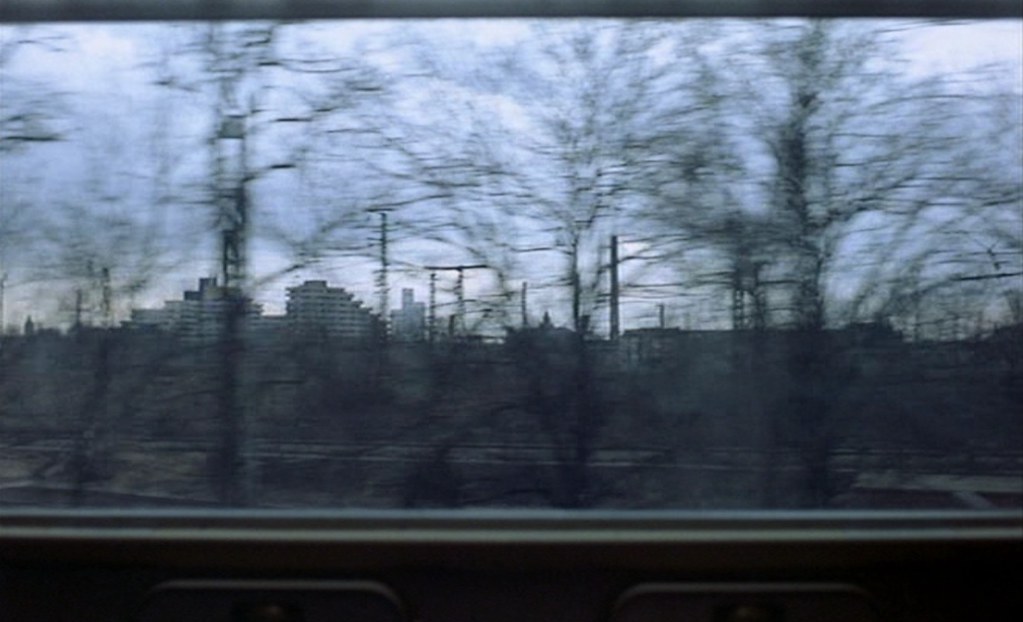
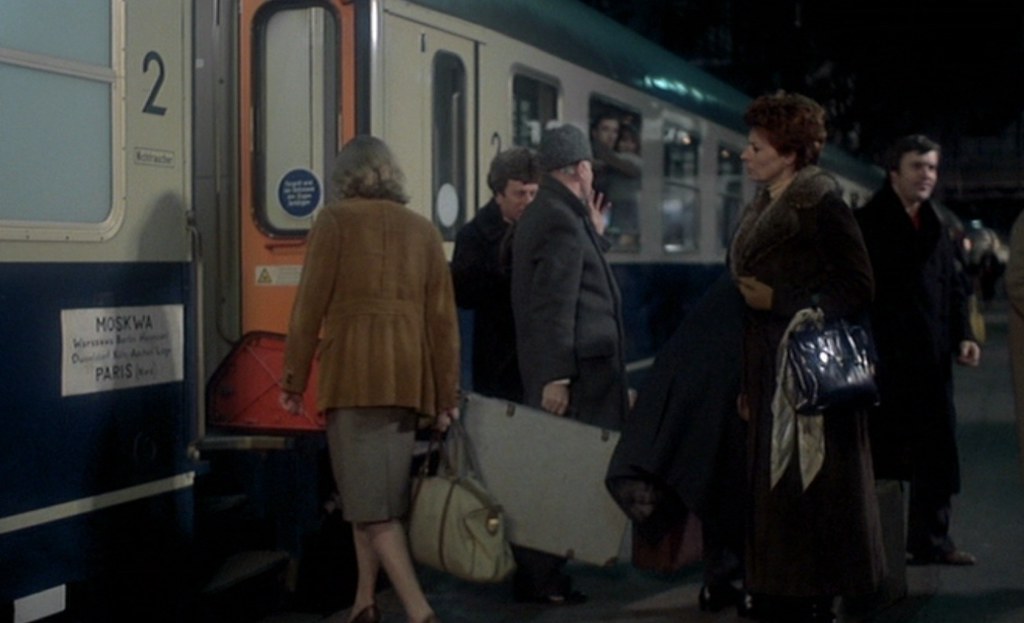
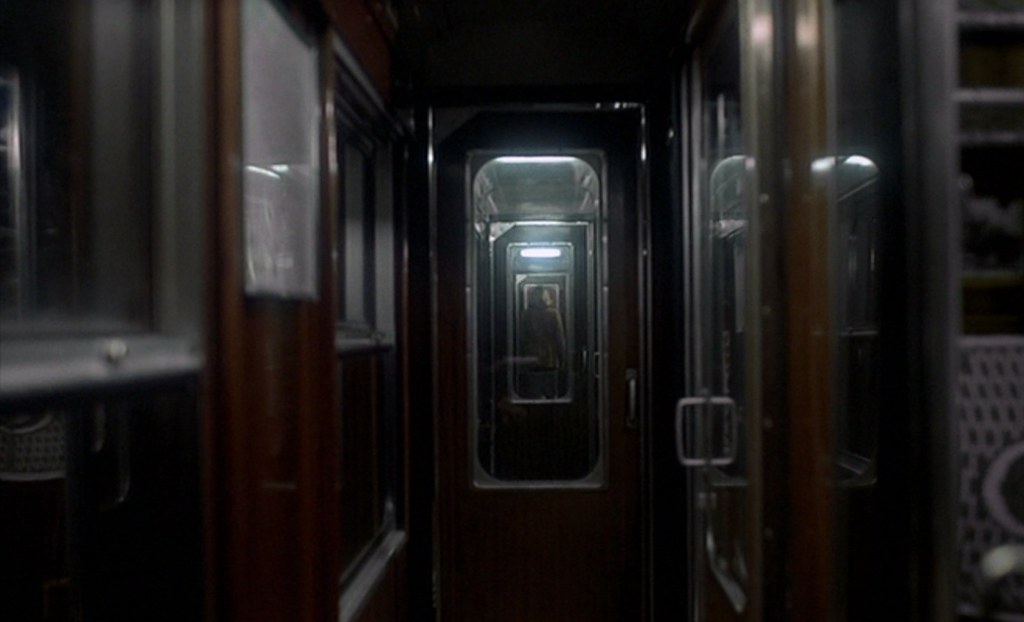
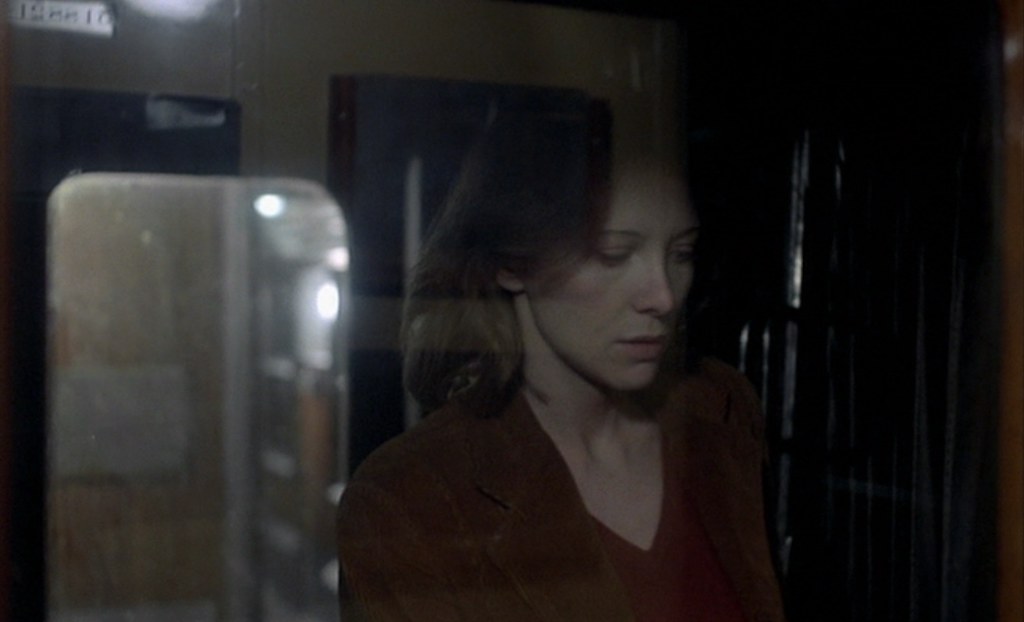
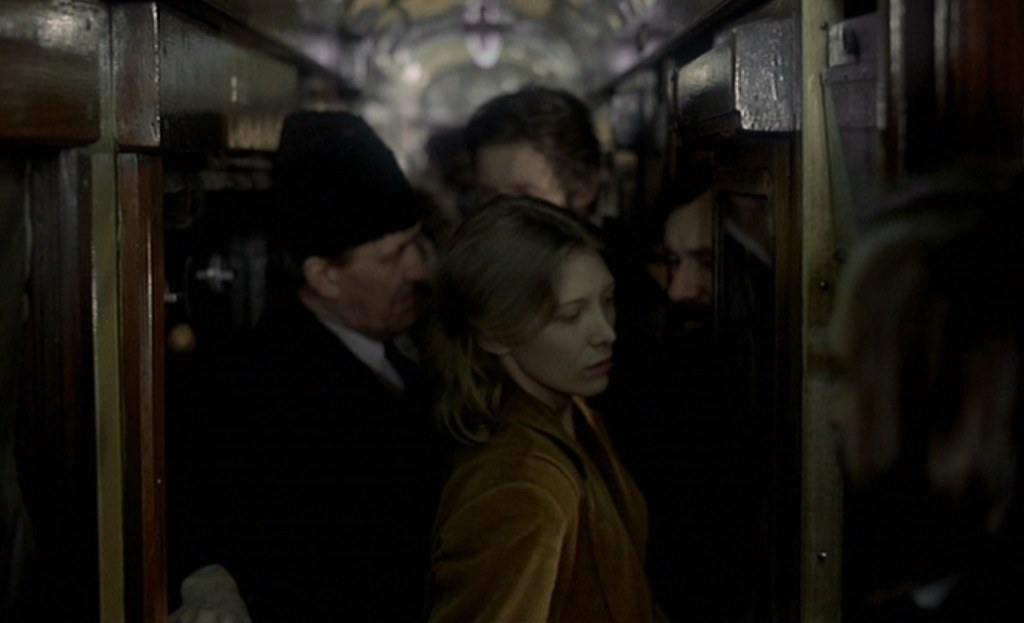
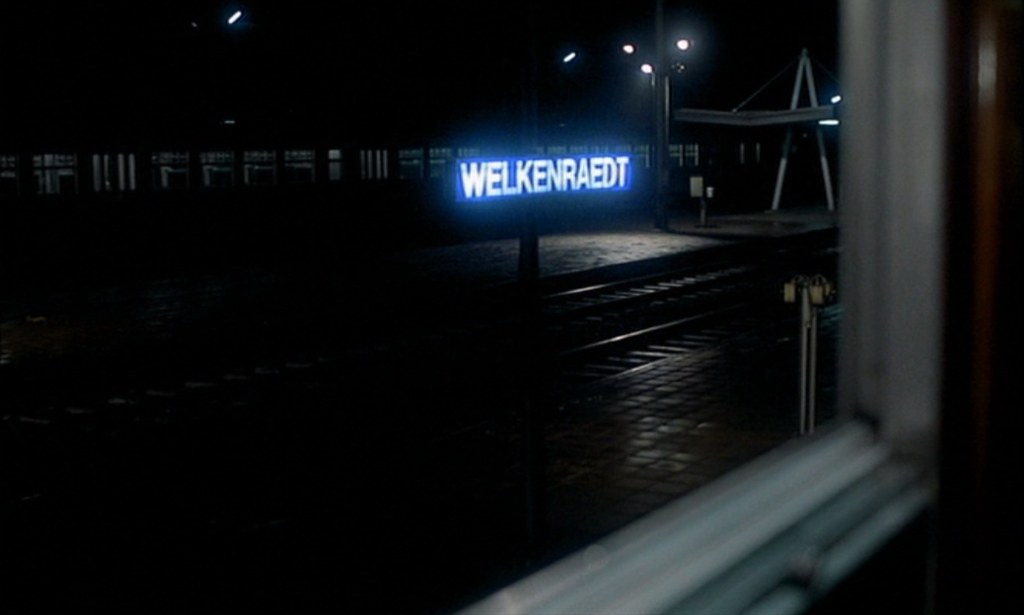
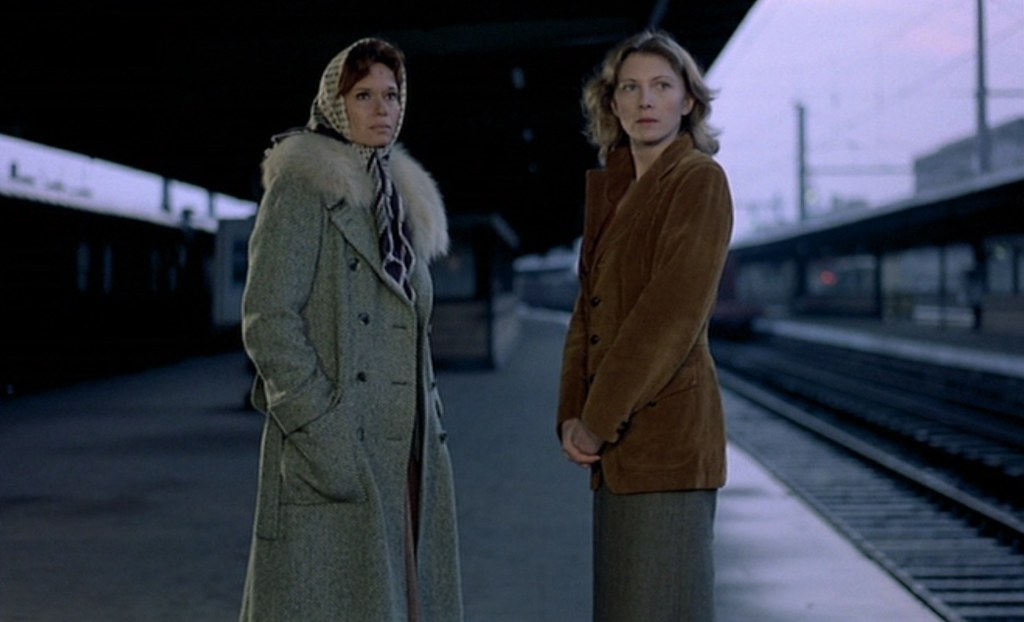
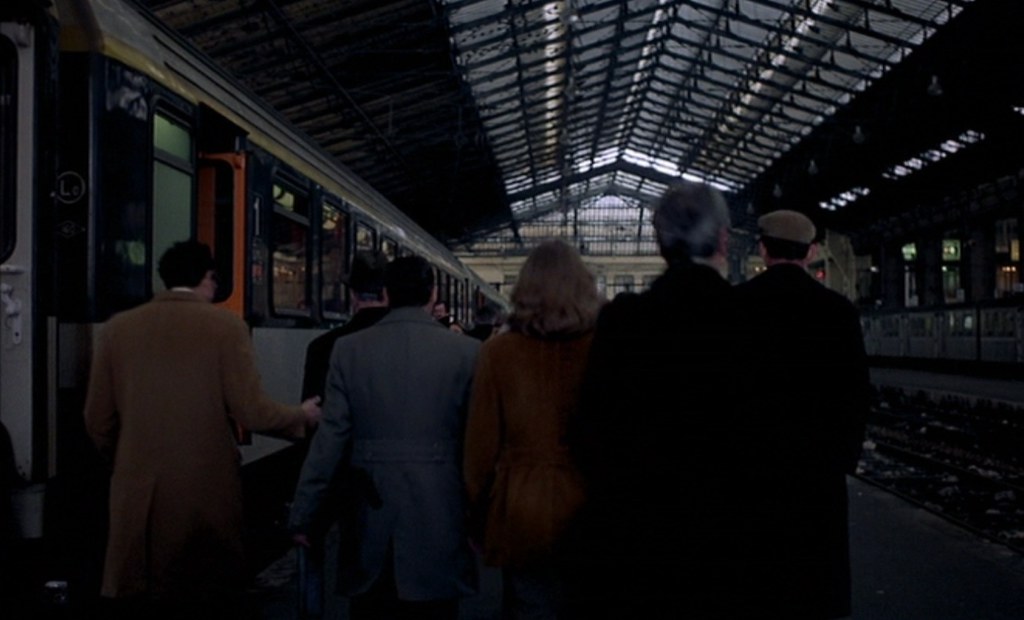
trains in cinema - les rendez-vous d'anna


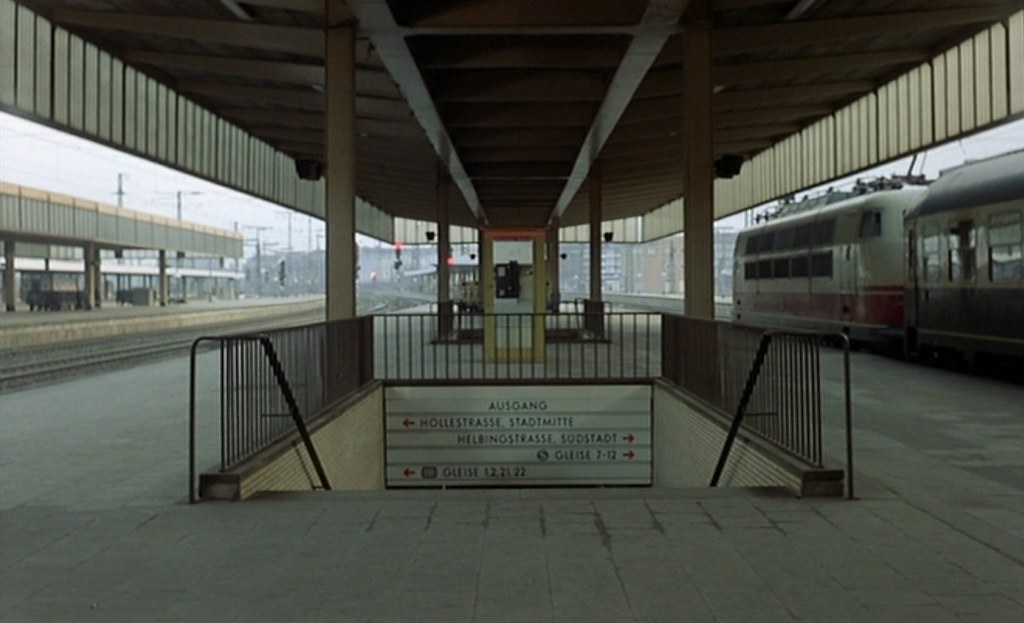
chantal akerman - les rendez-vous d'anna - 1978
(click images to make bigger - to see trains or other details)